#175-57 Days Around Lake Superior: Conny Simes Solo Sea Kayak Odyssey encore


 Apple Podcasts

 Spotify

 Overcast

 Castro

 PocketCasts

 RSS Feed
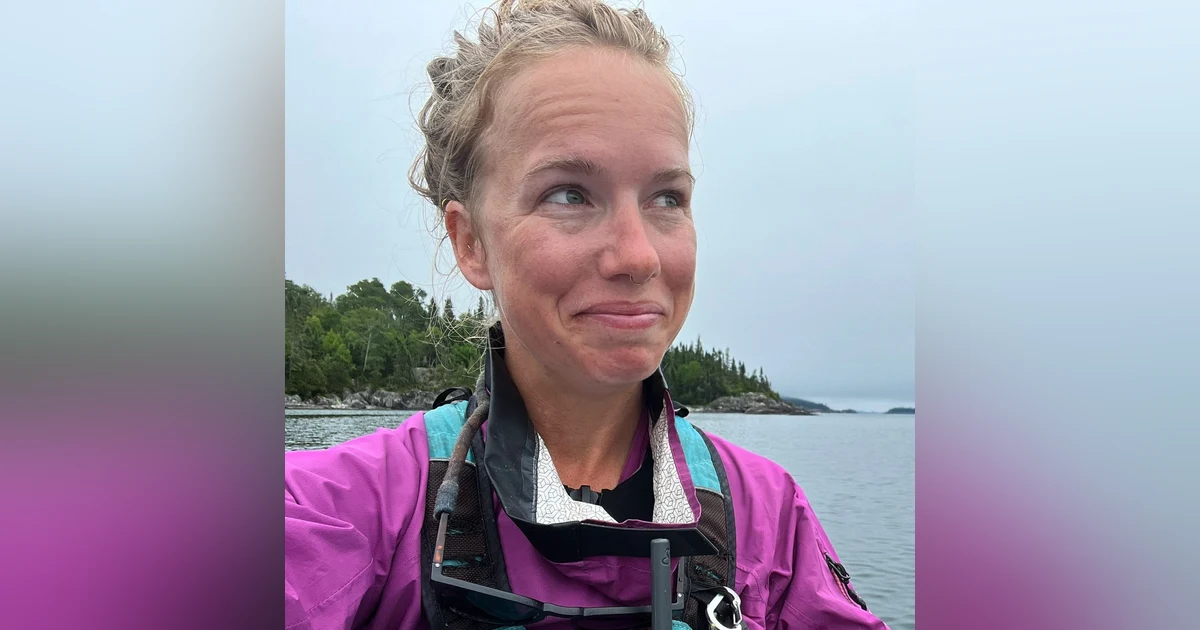
Today's episode is an encore presentation of my June 2024 interview with Conny Simes about her 57‑day, 1,134‑mile solo circumnavigation of Lake Superior. Conny describes the changing landscapes—from the Apostle Islands and Pictured Rocks to the remote Pukaskwa coast—along with the logistics, weather, and resupply challenges she faced.
The episode also explores how the journey supported Conny’s personal recovery while managing Ehlers‑Danlos syndrome, the people she met, safety lessons, and practical advice for paddlers planning their own expeditions.
Learn:
- Lake Superior map
- What are Agates?
- Crisp Point Lighthouse
- Ehlers Danlos Syndrome
- Pukawska National Park
- Lake Superior Provincial Park
- Sleeping Giant Provincial Park
- Pictured Rocks National Lakeshore
- Grand Sable Dunes
- Wilderness Inquiry
- Such a Nice Day Adventures
- Naturally Superior Adventures
- Sjana Shanning's documentation of her Lake Superior trip (Mentor to Conny)
- Richardson's Lake Superior Chart Book & Cruising Guide (Maptech)
Connect:
00:15 - Encore Lake Superior Voyage
02:30 - Connie’s Paddling Origins
05:54 - Apostle Islands Overview
09:41 - Planning the Circumnavigation
14:39 - Route, Miles, and Weather
16:06 - Changing Shorelines
20:09 - Crossing into Canada
23:42 - Mapping the Expedition
24:51 - Pukasaw and Provincial Parks
29:42 - Solitude and Surprises
32:50 - What Are Pukasaw Pits?
33:52 - Rossport Islands Solitude
37:22 - Living with Ehlers-Danlos
44:02 - A Rough Day in Pukasaw
47:18 - Early Trip Challenges
50:47 - Lessons from the Journey
53:53 - Returning Toward Home
57:09 - Advice for Future Paddlers
59:43 - What Comes Next
0:02 Welcome to Paddling the Blue. With each episode, we talk with guests from the Great Lakes and around the globe who are doing cool things related to sea kayaking. I'm your host, my name is John Chase, and let's get started paddling the blue. Welcome to today's episode of the Paddling the Blue podcast. It's been a busy paddling year for me, so I'm bringing you a few episodes from the archives. As the season winds down here, look for some fresh content coming your way. There's a lot of great stuff in the archives, and I'm really proud of each one. It's been really fun for me to dig back in and relive some of these episodes, and I'm hoping you're discovering ones that you didn't know about too. So today's guest is Connie Symes, formerly Belle. She's our encore guest for today's episode of the Paddling the Blue podcast.
0:43 And we recorded this episode in June 2024, where we talked about her 57-day circumnavigation of Lake Superior. In this episode, she shares the experience of this voyage of self-discovery, how this trip helped her manage personal challenges, and she describes how the lake changes as you make your way around. It's an inspiring tale that makes you want to start planning your own trip. And one more note, Connie's about to welcome a new little one into her life, possibly right when this episode is about to release, so congratulations in advance. We'll hear from Connie in just a moment. James Stevenson and Simon Osborne at OnlineSeaKhiking.com continue to produce great content to help you evolve as a paddler and as a coach.
1:23 And you'll find everything from basic strokes and safety to paddling in tides, surfing, coaching, documentaries, expedition skills, and incident management, and lots more. So if you're not already a subscriber to OnlineSeaKhiking.com, here is your opportunity to get started. Visit OnlineSeaKhiking.com, use the coupon code PTBPODCAST, at checkout, and you'll get 10% off just for being a member of the Paddling the Blue community. And for those of us who also enjoy paddling whitewater boats, be sure to check out online whitewater.com. They're offering the same discount to listeners with that same coupon code PTBpodcast. And I'd love to help you put those skills to work. I offer a wide range of programs in the Great Lakes and beyond, from paddling skill development, instructor certifications, workshops, CPR and wilderness first aid, guided trips, and more.
2:09 Most recently, I led a trip to Alaska, and we're working on some cool future trips as well. Visit PaddlingTheBlue.com, click the Courses and Trips link at the top of the page, and I hope to see you on the water. With that, enjoy today's episode with Connie Symes. Hi, Connie. Welcome to Paddling the Blue. Hi, John. Thanks for having me. Yeah, I appreciate you taking time to join me today. So we are here to talk a little bit about Lake Superior, one of our favorites. But tell us, tell our listeners a little bit about you and your personal paddling background? So I'm originally from Iowa, so not a lot of water there. Just started paddling a little pond in central Iowa and started paddling around there and then got invited by a friend to come up to Lake Superior and paddle to these amazing Apostle Islands. And ever since then, I was hooked.
2:57 So I moved up in 2013 and started guiding for an outfitter. I have been guiding on and off ever since for about eight years now. And just always wanted to do a little bit more personal paddling and decided to do the lake because the islands were just beautiful and stunning in their own. But I wanted to see more of what the lake had to offer. Yeah. All right. Now, have you visited all of the apostles? I just finally did that last fall. There's a couple that are rookeries that you can't actually go to in the summertime. You only have kind of the shoulder and winter seasons to go to just to prevent people from impacting the nesting habits of these local birds.
3:40 And got out to Gull Island, which is very small. Shouldn't probably be too much of an island, honestly, because it's just a big pile of rocks. But it was beautiful and stunning and got out to Michigan Island as well. So those were my last two that I finally got out of the 23. All right. So there's 23 Apostle Islands or 23 islands in the Apostle Archipelago. 22. 22. Yeah, that would be an edit. Okay. I added Madeline twice in my head for some reason. Yeah, 22 islands. All right. 21 in the National Park. Well, congratulations on making it to your 22nd island on the chain. Thank you. That's pretty cool. Now, for those that aren't familiar, the Apostle Islands, tell us where they're located so everybody knows.
4:25 So they're on the south shore on the state side of Lake Superior, kind of more on the western side, just I believe it's like 80 miles from Duluth. So the westernmost part of the lake, Duluth is the biggest port on that side. Now, you've had quite a journey here. So you've been at Lost Creek Adventures, Trek and Trail. Yeah. So I started at Trek and Trail. I was about five years and then I just moved around. And so I decided to go to the nearest ones was Lost Creek for a year. And then last year, I was actually at Wilderness Inquiry, which is a nonprofit outfitter up here in the Apostles. They do a lot different than the other ones, which is amazing and was really fulfilling.
5:08 I've also guided another place, not in the Apostles, in New Zealand in the Marlborough Sound. So kind of totally switched it up for one winter. Out of the main outfitters up here, I've paddled with most of them. So you did summers on Lake Superior and then did the winter in New Zealand. Yeah, I did that for one year. I've wanted to do it some other years, but then with the pandemic and whatnot, it just made it a lot more difficult to get down there. That's a dream destination, certainly. Yes. But Lake Superior is not so bad in its own right. No, I definitely missed it when I was there. Apostle Islands. I know we're going to talk about your circumnavigation of Lake Superior, but Apostles is one that we really haven't had a chance to talk about much on Paddling the Blues. So tell us a little bit about the Apostle Island Archipelago.
5:56 So, as I said, it's on the western side of Lake Superior. It's a little peninsula, the Bayfield Peninsula kind of sticks out. It's the northernmost point of Wisconsin. There's 22 islands and filled with beautiful pine forests, sandy beaches, some really beautiful sandstone formations that are very, very unique. Definitely after paddling the whole lake, I can definitely verify that there's nothing like these islands anywhere else on the lake. There's caves that you can paddle through. It's just stunning all year, whether you can hike the trails or paddle especially. It's a whole different level when you can paddle through them. Yeah, and you've got some beautiful sea caves on the mainland side and then also out in the islands as well, correct?
6:42 Yeah, so there's this main formation called Devil's Island Sandstone, and it's along the mainland for about three miles, and then it hits Sand Island for a little bit, and then it goes. All the way out to Devil's Island, which is definitely the northernmost point of Wisconsin, and it's maybe a mile long, and about half of it is just stunning orange-brown lichen-covered sea caves, And then the northernmost point is a beautiful lighthouse that you can see. Just really stunning scenery. Very cool. How much land area or water area, I guess you'd call it, does the Apostle Island Archipelago occupy?
7:23 So I don't have that right off hand, but I know the farthest island out that you can paddle to from mainland is 22 miles out to the farthest island. And that's its southern tip. And it's about, I think, 26 miles around the island. So I would say probably between Eagle Island and Goal Island, which are the farthest west to east, it would have to be probably 30 to 40 miles between there and then a good 20, to 30 miles north and south at least. Yep. So a pretty good amount of land and water area all together. And you're not 20-something miles out directly with nothing at land.
8:06 You've got your island hopping all along the way. Yeah, there's not, they're not too far. A lot of them are honestly about four miles apart and it's just like a perfect little island hop for snacks, lunch, and then go to the next one and then camp. And it's just really easy to, you know, make your own path and find your own little adventure within it all. Yeah. And they really are a stunning set of islands. And like you say, each one has its own personality. You'll find something different on every one of the islands. So beautiful area. Yeah. Yes, indeed. Good. Now, how did you go from art history and mathematics to paddling? That's a good question. So I didn't get into paddling and wasn't really, you know, super outdoor adventurous household growing up.
8:52 So once I finished college, it kind of was not the greatest time, a little bit of a recession time, 2008 to 2012 area. And I had a job and I lost it within a month of graduating. And so I needed something to occupy my time and I found paddling that way. And so you went from a little pond in Iowa and decided to make your way up to the biggest pond, Lake Superior. Yes, yes. The biggest by area. It was definitely a switch. And then from there, you guided, you mentioned for eight years, or have guided for eight years. And then when did you do your circumnavigation of Lake Superior? So I did that in 2022. So, you know, a year and a half ago now.
9:37 I had the summer off before guiding as well. So 2021, I didn't guide as well and just wanted to do personal stuff for a little bit, take a break, deal with some health things that were going on and, figured I should probably, you know, check this off my bucket list before too long, just in case anything was getting worse. And so tell us about the trip itself. Give us kind of the initial overview and then we'll dig into the trip in detail. Awesome. So I started at Little Sand Bay, which is in the Apostle Islands, not quite the northernmost point, but pretty far up on the peninsula. And then I went counterclockwise. They didn't really have much of a reason for that. Besides, I know I wanted to finish my trip doing the sea caves on Myers Beach, the mainland caves.
10:26 And even though I've seen them thousands of times guiding, because that's kind of our bread and butter trip when you're doing prophet guiding out here. I just that was home to me and so I wanted to finish somewhere that just totally was like I am back I am here I I completed this okay so I went counterclockwise, went through the Keweenaw waterway and then went down and into Whitefish Bay, and didn't go into any of the three bays Thunder Bay Nipigan and Black Bay I didn't do those so why'd you go through just out of curiosity Why did you go through the Keweenaw channel as opposed to going all the way around the Keweenaw Peninsula? A few reasons. I had some friends tell me stories about going around it.
11:10 And sometimes you get really stuck out there because it is just so exposed and it's really, you know, swings out into the lake pretty far. And so I just heard of people getting stranded and taking way longer than they wanted. And then also technically it is an island. It's Copper Island. And so that's where I kind of started my thought on, okay, I'm just going to focus on circumnavigating the lake and then I can come back to these islands. So like Copper Island, the Slade Island, Mishapicotton, Isle Royale, those are all going to be side adventures for later on in life. Gotcha. Okay. All right. Now we will make sure that, just for reference, I'm going to put links in the show notes to a map of Lake Superior so folks who are listening and aren't familiar with Lake Superior can kind of follow along about some of the places that we're talking about.
12:01 All right. So you're doing the counterclockwise tour. And so tell us what you're experiencing along the way. So as you leave Little Sand Bay, you know, what are you seeing along the way? So along the South Shore is a lot of sandstone, really erosive cliffs, most sandy beaches. If they are rocky, they're really small rocks, you know, nothing too rough. Sometimes there are a little bit of slab sandstone kind of rock that you can just gently nudge up to and it should be shallow enough. Nothing too steep. If you're not by the cliffs or like steep for landing, it is very shallow approaches. So nothing too crazy as far as you know not being able to find a spot to land it's pretty accessible here, going up to you know through the waterway i went under the only bridge that i did the whole entire lake because it's a lift bridge connecting the mainland to copper island and saw the transport out to isle royal the boat the airplanes that was really an interesting kind of traffic situation there.
13:09 And then as I continued through the waterway toward Soussaint going eastern along the south shore, kind of found some more rocky little outcroppings of islands along Marquette. And then toward Munising, there's Pictured Rocks National Lakeshore. So it's similar to the Apostle Islands in that it's sandstone, but it's a little bit lighter and has a lot more interesting banding of colors along it and they are a lot taller and so, thankfully I had friends join for a day paddle there to show me all the nice beautiful sights and caves there and then after that was some beautiful huge sand dunes by Grand Marais Michigan I you know I wish I could get out and hop up and slide down on they're just so tall, And along the way, too, there's just so many lighthouses. I know there's one near Grand Marais that I actually got out and climbed up real quick to get just a different view and stretch the legs while I was taking a snack break.
14:10 And then, yeah, that continues really all the way on the state side to Whitefish Bay where there's just, you know, little, beautiful little coves of sand beach. It's stunning. How long was your circumnavigation? How many miles and what kind of time? I did in 57 days. I left. June 22nd and finished August 17th. And I estimated I did 1,134 and a half miles roughly. So it's about 1,800 kilometers. And over those 57 days, how many off water days? Or is that 57 days paddling or 57 days total? That's 57 days total. I had eight off days.
14:52 So technically only paddled 49 days, whether it was due to a couple weather days, you know, 30 mile an hour, 11 foot waves predicted or resupplying or just found a really beautiful beach, or just, yeah, wanted to spend a land day to, just see Sault Ste. Marie and a few other areas and just not have to paddle for a day or two. So it was kind of nice to have some off days. There was definitely a couple where I was stuck in Marathon, which is all the way most north, northeast part of the lake. After the big remote Puckasaw area, I had to spend a couple days there because my package was stuck in Toronto for my resupply.
15:34 And so I just hung out in this little peninsula for a few days and honestly did not see another soul unless I really wanted to that day. And I just mainly hung out and did my own thing. Along the way, you see a lot of different types of landscapes. So you start out from the sandstone in Little Sand Bay, and then you move along and you get through the Keweenaw Peninsula area, and you get to Pictured Rocks, as one of the other locations is going to pick on that. So tell us how that landscape, the Pictured Rocks, was so much different than some of the other areas up until then. And give us a visual of what the Pictured Rocks are like.
16:16 So up until then, there's those golden sand beaches with really shallow approaches and nothing too tall of cliffs. You know, the Apostle Islands, I think they're maybe 60 feet tall. And then as you get around past east of the Keweenaw you get to Marquette and there's just kind of more kind of black rock, you know pebbles but not like too big of rocks but some of them do get a little bit more slab like in that and then, yeah then you get all of a sudden and it was really interesting as I approached pictured rocks it was really foggy the day before and so I didn't get to see too much like around me and so it kind of, like once it cleared it just was like wow there's some really tall cliffs here and I've been there before but, I you know I got close to Grand Island and whatnot and it was just they're hundreds of feet tall I mean I could be over exaggerating that but it felt like they're 100 feet tall and there's just huge caves like arches as.
17:16 Is probably a better way to put it so there's huge arches it's like a golden light colored sandstone and it's kind of banded a little bit and with black and other colors and then lichen as well but then And sometimes you'll just see these areas where the water is leaking through and it just kind of, leaks out these beautiful stains of the rock. And so there will be like a turquoise blue next to this orange and yellow and black. And it's just streaking down the cliffs as well as them being banded horizontally. It's really, really beautiful. Yeah, it is. It is quite stunning. Now, you go from there and you transition completely out of the, you go from sandstone to pebbles to slabs to 100 plus foot cliffs.
18:00 And then you go to sand dunes. Yeah. Yes. And I didn't really land there because it was just, they met the lake so well. Like, you could barely land if you wanted to, not even a boat length on it. And they're just really majestic. And I think right at the end, or right before them, actually, was this beautiful lighthouse. So you just have this like stunning, bright white with red roof kind of lighthouse structures. And also you turn the corner a little bit and there's just these huge sand dunes and just nothing, no houses, nothing else, kind of human insight. And did you do this trip solo for the most part? Yeah, I did it solo. I definitely had some support on land. My fiance met me a few times.
18:42 And then I paddled with a few day trips with friends that met me, friends I've never met a couple times, but new friends. And then my last day, I had some friends join me for the last stretch. And then I made sure to do my last few miles alone, though. But through Canada, I didn't see anyone I knew. I did connect with a few people that I talked to beforehand, like an outfitter that I was connected with, naturally superior outside of Wawa. Yeah. Oh, also Zach Cruzen's up at Rossport. I've connected with him over social media and stuff, but never met him before. And so it's really awesome to finally meet people that I've been chatting and be like, wow, your place is so cool to paddle up there.
19:23 I can't wait to be there. And could I stay the night and stuff like that? And yeah, it was just really interesting. I think it was 25 days that I was in Canada and I just, yeah, didn't see anyone I knew, which was very interesting. That's pretty cool. That's quite an experience. So now after you go from the dunes, you mentioned you kind of continuing to head east, you go through Whitefish Bay and then you start to get to the Canadian side. So what's it like to be able to cross from the U.S. to Canada? One, I tried to go from, I wanted to originally go from Whitefish Point to Coppermine Point, which is a 15-mile crossing across the shipping channel. But the lake had other ideas that day. It started to slowly build from the northwest.
20:07 So that's a really, you know, a couple hundred miles of fetch coming through to this little bay and narrowing to 15 miles only. And so I had to add in about four or five more days, I believe, in Whitefish Bay. And that was interesting paddling to say the least in there. Just always seemed to be calm when I left. And then all of a sudden build when I was halfway through my day paddling and whatnot. And then on the Canadian side, I crossed from what is it? Point Iroquois lighthouse. And then just to kind of a no point spot across. And this is right after COVID, you know, two years, but still they're, you know, restricting access and whatnot. And remote border crossings were still not happening or were almost going to happen.
20:57 And so I was calling before and all of that to just see what my options were. And so I filled out you know an app online and then once I got across I called and, they let me in but I definitely could have done it a little smoother but they did let me in and allow me in and give me a you know a number to reference for my entry and whatnot, but yeah I just I hung out in this bay as I made the phone call so I'm like I'm not touching Canada yet but I'm just hanging out making sure I'm allowed and then I'm sure enough they let me in that was about a four mile crossing. So I was okay if I had to go back and figure something else out. But thankfully, I did everything right to let them or to have them let me through.
21:40 Now, yeah, if you had if you had taken that original path of planning the 50 mile crossing and get across, it's harder to just turn around and go back. Yeah. Yeah. And sorry, I should not say it. 15. So not 15. Yeah, 15. But yeah, that would have been harder. So once you get over to the Canadian side, how does the landscape then change again as you get there? So the first place that I actually landed was just probably softball size rocks and boulders just kind of everywhere, like a little rough on the boat and ankles as you're trying to. I had my boat loaded for about three weeks of food, definitely then, because I got reapplied right before I left the States. And so it was really heavy and just trying to slowly pull it up.
22:23 And then I would just unload it as quick as possible and then carry it up farther when it was empty. And so that kind of happened throughout most of Canada or most of the eastern side, I should say, was just these boulders. Some one spot near Lake Superior Provincial Park, which is the most eastern part of the lake. There's just huge, like almost volleyball size boulders and just on top of each other. Like, I don't know how they stayed there without just falling down constantly, but it was just stum. Launch and land for sure. But thankfully, I did my own keel strip before, and it definitely took a beating through the entire trip, but definitely protected my kayak a lot more.
23:04 How did you plan the trip and determine the general areas that you thought you'd stay? So thankfully, I had some great resources along the Bayfield Peninsula. There's a couple of friends of mine that have actually done the lake before. Some were 14 years ago, and then one was a couple of years before me, maybe five years. So I got to connect with them and look at their maps. We, you know, have the main, it's like a sailing chart, you know, 80 some pages long of all the different sections of little flags where, you know, like, oh, this is a sandy spot. Oh, this was rocky. This was really populated kind of stuff like that. And talk to them. And then I talked to, I think you interviewed them before Tracy Lynn Martin when she was doing her Great Lakes record. Record.
23:49 I actually met her when she was doing that, just randomly on a day trip guiding. And so I got connected to her through that and then was like, oh, hey, I'm going to do the lake. Would you mind chatting about things and, you know, tent and general areas and, lowdowns of, you know, these sections and what to watch out for? It's good to have good friends and especially folks that have come before you and done the trip. Now, you mentioned Lake Superior Provincial Parks on the most eastern, eastern most end of the park or of the lake. And you go through that area and through the whole Puckasaw coast. Tell us what that area was like. From Lake Superior Provincial Park, it was absolutely stunning. A lot of canoeists, surprisingly, but there's a lot of islands, so it gets really protected in some areas.
24:33 And there's some private islands and whatnot where there's little houses. It was just absolutely stunning. There's a certain part there that is Warehouse Island and Chair Island. They're kind of old remnants of the volcanoes there that are in Lake Superior. So there's like little rims that you see like popping up and just really roller coaster kind of views underneath you with the clear water you're just paddling along and you're like oh there's like three, feet underneath of me and all of a sudden just drops in this huge crevasse and you just know like there's some history there with geology and whatnot but it actually like made my stomach drop on a few times, just because i had perfect days paddling there um and then once i get into Wawa.
25:16 And then, yeah, along the Pakistan, there's some sandy beaches, but it's not much. It's still kind of that rocky, not as steep of areas too, but just absolutely, serene location where there's some like kind of, I don't know the rock quite really, but it's kind of more like granite, you know, the Canadian shield style of rock where trees are just growing right to the. Some spots I could find no one else, no presence of human, and just would stop and listen to like utter silence. And it just was really, really moving. And I didn't think that places like that actually still existed. And it was really cool.
26:00 It was amazing. But I was going against the natural flow of people. Most people start up in marathon and go from north to south on the Pukka Saw. So every day I did see other kayakers just because I was going against the natural flow of traffic. Ah, okay. But I think if I went the right way, yeah. Then you wouldn't have seen anybody. Yeah, exactly. Yeah. I've been to read a lot of folks that have done similar areas or have done that area and said that they've gone days without seeing a person. Yeah, that didn't happen to me until I was up by the kind of the Rossport Island set, you know, near Black Bay. Nipigun Bay that's where I probably went a week without actually talking to anyone or anything like that like I saw some old you know little cabins with saunas and maybe some boats way off in the distance.
26:52 The solitude you've been seeking right? Yeah. And I, again, had some great weather there. And so instead of having to take more of a sheltered route, I was able to take the farthest southern side of those island sets, the exposed sides of the lake and just really, you know, island hop, you know, not too far of distances, but really get a sight that side of the islands that most people don't get to see. Tell us about the people you experienced along the way. I, you know, met some really amazing people. I had definitely, you know, had my support system meet me along the way. There's some really great people I met up in Lake Superior Provincial Park. Again, I was paddling against the natural flow, mostly, and saw some other sea kayakers. I figured I'd like, okay, I should chat with someone.
27:38 It's been probably a week since I've talked to someone. And so let's go talk to these nice looking people. And they have some really nice kayaks. And just, yeah, they were just doing a couple day trip. And then actually they told me that they were going to do pukka saw. And I was like, well, that's actually where I'm going next. And sure enough, they walk in a few days later when I'm having dinner with David up at Naturally Superior with all of his guides. And they walk in, they're like, Connie, who are like everyone else is like, who are these people? I'm like, I know them. And then we, so I met them there and then I actually met them paddling the Pukka Saw again. Like that's where we were on land, but I actually met them paddling and swapped some maps and some knowledge of the rest of their route and.
28:21 But overall had really great, you know, interchanges of people, but I didn't really go out of my way too much to talk to people. But, you know, people would come up and be like, oh, hey, where are you going? You know, just natural chat. And I would usually just kind of downplay it for, I felt like more safety reasons and not saying like what I'm doing exactly or where I was going. I'm like, oh, I'm going roughly here. But I wouldn't say like, oh, yeah, because it's day 30 of this trip. I would just be like, yeah, I'm just staying over here for the night. It's really nice. And I paddled. I just stayed here. So give them little suggestions and whatnot. But overall, it kind of kept to myself more than I think most people. Now, what did you find most unexpected along the way?
29:02 So I did kind of people say I did kind of rush it, which I didn't feel like I was. It just was, you know, time of the year. I have like 14 hours to paddle and, why be on land and whatnot. But there's some unexpected sections like Whitefish Bay was, I looked through my journals earlier and I wrote spiteful. I feel bad, but I like maybe I should give it another shot. But I just, again, it was that every time I left, it was calm. And then as soon as I got far enough out, it would just start really quickly picking up. And it's just that chop that's really rough. Overall, you know, Puck-A-Saw is stunning, like Superior Provincial Park was. But again, those Rossport Island sets, like Zach up there told me about this 50 plus day that, or 50 plus day expedition that he did up there to make the little guidebook up there.
29:54 And he didn't even touch everything. You know, he didn't see every single part of that. And that's just amazing that you can spend that many days and not see everything. Yeah. Let's really, let's start to get into that area. So you've gone to the Puckasaw Coast, you've passed Marathon, you start to get into the area that you're referring to. So tell us a little bit more about that. So that area, how to describe it? Let's think. This is kind of the northwest side of Superior, right? Yeah, northwest side, some really big islands that if you just glance at the map that you wouldn't know they're islands, but some of them are just really massive area. And there's so many little ones and it's all, again, pretty rocky, more Canadian shield like where it's kind of a dark gray, blacker rock.
30:42 Actually, in some areas, I was told that my compass, my deck compass, might have some weird little spinning axe going on because it's going to just be hitting that iron and just really alter the magnetism in my compass. So it just kind of that kind of shaly on the rocks, pine trees right to the, lake. And then there's some remnants, you know, the First Nations up there, too, with their pukkasaw pits and whatnot, and definitely respected those. I didn't really see any of those just because I didn't want to impact that area personally. I saw some from the lake at a distance and respected them that way, but did not want to go on to land and impact it and perhaps damage it.
31:26 But yeah, it's just beautiful. I've walked on lichen spots that were just cushy. It was like three inches of lichen and moss on the land and then agate beaches, which I haven't really found agates until this trip. and it was really awesome. It's just really interesting, like old saunas, old forestry camps that people just, you know, they say, you know, here's a journal, write your... Days that you're here and whatnot, share your story, but like just leave it as you found it or better and respect it and you're free to use this area and it's really awesome. So you mentioned a couple words earlier, Puckasaw Pits. So share with us, with our listeners, what's a Puckasaw Pit?
32:09 So from what I understand, people don't really know the real reason for them. But some people say it's for cooking. Some people think it is for sheltering, but it's mainly this dome or semi-circular area that is then built up with rocks around it. And since they've been there for so long, they're just covered with moss and lichen, at least the ones that I saw from a distance. And just sacred spaces for First Nations and just really spread out through the Pukasaw and then, of course, all the way up into the Rossport Islands. set.
32:49 So they're just, they're, they're pits that have been dug into the, into the cobblestones to be used for a number of purposes, right? Yeah, and then, yeah, then they take the rocks that they pulled out and stack it along the edges to create a little bit of a wall. So back up to the Rossport Islands. So what else, what else was so fascinating about those? Just the solitude was amazing. There's some islands that were so close together that it was actually like a river channel. And so all of a sudden, you know, the lake is stunning and beautiful and bright blue. And this was like kind of a milky, pale or blue color through, I think it was Fleur Island. Just had this interesting little river channel.
33:31 These tiny little islands that have no way to land on them because the pine trees are just so dense all the way to the edges. Beautiful eagles swooping around and fishing. Interesting little peninsulas coming out in very dynamic waters. I think I had the biggest swells there just due to the depth changes so quickly. And then, yeah, they exposed. So it's opposite. Like if you go Whitefish Bay is all the way in the southeast corner. It's going all the way directionally northwest of Whitefish Bay. So it's a pretty long fetch there. So when you do get waves, they can get pretty big. But thankfully, it all happened overnight. So the swells were just really beautiful and splashing off these old, you know, towering peninsulas that would gently slope into the lake.
34:19 Sounds beautiful. Now, did you get to Norivia? I did not. Zach told me about it, but I did not. I think I was out a little farther than where that's located. Okay. You mentioned you went on the outside, so you didn't get a chance to get to the inside of all that. Yeah. All right. Yeah. What did you enjoy most about the experience? I really enjoyed kind of planning my days and like doing what I wanted and not having like a structure. Like, all right, I'm going to paddle and then never had a big, you know, I must get to this point. Obviously, certain areas you have to plan around to like the cities or the landscape and where you actually have to make it.
35:02 But I had a very loose plan and just went with what the lake gave me. And I just, I had, I think, a very nice and beautiful experience of the lake. I did have some, you know, interesting waves and interesting and scary moments. But overall, I had a beautiful summer with it. Everything blew mostly overnight. So I would just get swells the next day and just really just took in what the lake could give me and not fight it. And found that to be very peaceful and just very fulfilling in that like, all right, I, you know, I've guided so many years. I can read this a little bit better than I thought and that I could actually do something like this because I had some health things going on before the.
35:49 Year before and whatnot. And I wasn't sure if I could do something like this. I honestly thought I would probably be going to urgent care or something at some point during this trip and whether just sidelining or actually not completing it. So I was really proud. And I've actually have never felt physically better than during this trip, which is crazy because I did, you know, over 30 miles a day some days. And that's, you know, pretty taxing on the body. But overall, just really something about the water, sunshine, repetitive moments of the paddle just really was soothing to my body and. My spirit as well, obviously. So you've mentioned your illness a couple of times, but let's take an opportunity to talk a little bit about that illness. What is it and how is it affecting you?
36:37 So I have Ehlers-Danlos syndrome, and it's a hypermobile version. And so with that, it's a different collagen buildup and makeup. And so I'm really stretchy and really flexible, but that also can cause organs to stretch, causes pinching of nerves pretty easy, lots of tendon tears that I've experienced. There's also like normal homeostasis with your like balance of your sleep or like intake, outtake, all that stuff. It kind of really messes with all your systems. So it's really interesting. Yeah, it sounds like it's quite complicated for especially if you're in a wilderness situation.
37:17 Yeah. And so I did, I have taken a few years off of actual active guiding with that. And so my trip kind of was me seeing where I was at and proving to myself, is this make it worse or does it make it better? And honestly, during my trip, I felt the best I've ever felt. But within weeks coming back, I definitely had those post-expedition blues, but also just noticed my body definitely feeling different effects of just not being as active and whatnot. So I wonder what it was during the expedition that made you feel better. Yeah, I don't know. I think it's a certain positional thing for sure. So I think like, like if you ask me to hike definitely any kind of elevation, I am like at the end of the pack, like no matter how, how much I can paddle in a day, I cannot hike upright.
38:09 So I think there's something postural going on for sure with that, whether it's just something's out of place now or it's a constant thing. It's always hard to tell. And also before my trip, so I did my trip in 2022. In 2021, February, I had some really bad neuropathy issues and it's never been really explained why, but I think maybe I pinched something or something got subluxed or displaced in a weird position in my neck. And I couldn't get out of bed, couldn't lift 10 pounds. I was just having massive pains in my hands. And so I got really worried that I couldn't even hold a paddle and grip a paddle. And that was at least a couple months of pretty major pain and definitely like taking time off for personal recovery of that for my job.
38:59 And so that kind of really definitely sparked my, I need to figure out what this is, but also I need to do this trip if I really want to do it in my life because who knows where I'll be next year. So how did you manage that issue on the trip? So the neuropathy, it kind of wanes. I haven't had that big of a flare-up since, thankfully. I do have some numbness occasionally, whether it's a pressure point or a position, I'm still really figuring it out, but it's definitely not even close to as bad as then. But I just really focused on doing yoga every morning, lots of stretching, kind of always doing a kind of a body scan of like where I'm at.
39:43 Thankfully I had different paddles too so with my arms having the neuropathy issue so I had a Greenland paddle I had, a Werner Cypress that was zero degrees feathered and then I had got my Lindell cadence later on that was a two-piece so I could alter the feather I think there was one more at some point. But I just like I would just switch them out with when my partner came and saw me I would just switch them out for what I thought I would need for the next stretch Oh, I had a Greenland paddle from Roy Martin. That's the other one. I think I mainly had his paddle and the cadence after a while. And that just was a nice combo of impact on my shoulders or elbows and just angle differences that really helped my body not get tired out in one position too much.
40:26 When you first started mentioning those paddles, I'm thinking, how are you carrying all these paddles with you? Yeah, no, I would switch them out. I didn't order the cadence soon enough because I was getting my Werner fixed. And that's when they told me that it had to be fused together and so, I chose zero because that's usually what you know most days I would like to paddle at no matter what and so I just started, looking around and saw that Lindos were pretty awesome and some friends had some really high regards towards them and so I decided to go and get a two-piece from them and it actually got shipped, and didn't arrive till I was probably like at least a week and a half in and so, then and my partner was able to drive out and provide me with that one.
41:09 Are there any other ways that you continue to manage that to keep yourself paddling today? You know, I keep trying to do yoga. I've been a little slacking lately, but I try to get on that when I'm like actively paddling and whatnot. And yeah, I just have different medicines in case I have flare-ups that can kind of help with it. But for the most part, I still am really figuring it out and hesitant to lead participants out. But like day trips and stuff, I feel very confident. But if I do like long expeditions, like in the islands, people can do up to like five days, even seven days out in the islands. And I just, I don't feel confident being a solo guide on that. So I'd always want to have someone with me if I did happen to get on one of those routes.
41:52 Any message that you have for anybody else who also has this condition? Oh, it's all this is a big it's a variable condition because it could cause issues with your heart and organs and so many things. But honestly, just find what works for you. But honestly, you can get out of bed. That's the hardest part with this condition is like, I just want to lay in bed all day. But once you start moving, your body starts loosening up and getting active. And that's the hardest part is just try to even walk to the end of your driveway. Because that's that was hard for me last that 2020. Early 2021 was even hard to walk to the end of my driveway. And so if you can do that, just slowly keep at it and do what you can.
42:36 Every day you're giving 100%, even though you might not feel like it's your best percent, but that's what you have to give for that day. Well, movement is medicine. And to go from just barely being able to walk down to the end of the driveway to be able to circumnavigate Lake Superior is a pretty impressive feat. Thankfully, I had lots of time in between, but you never know what I'm going to get with this syndrome. So it's day-to-day and do what I can. Well, we'll include some links in the show notes so people can learn a little bit more about it. Awesome. Thank you. A few minutes ago, you had mentioned waves and you'd mentioned swell and you'd mentioned conditions. So let's talk a little bit about some of the conditions that you faced. What, any particular sketchy moments?
43:17 As most paddlers of the lake will tell you, my scariest moment was probably in the Pukasaw. Just because it's a really remote area and really dynamic landscape, and I had a nice day a little chop a little rebound reflective waves happening but I was trying to kill time because, I was waiting on my resupply package so I decided to paddle up the White River and hike a little bit to the suspension bridge jets over that, and then as I was paddling down I was faced with a headwind all the way down the river where I was expecting to take a nice little easy float down but it obviously something changed on the lake. And once I get out, I paused before I exited the river mouth because there's actually been some fatalities on that. And so I wanted to get out at this little campsite that's there, hike across and check out the actual conditions of the lake. And it was pretty choppy.
44:10 And there's another paddler there. And they said, yeah, it was really rough coming around the corner because they were coming from north to south. So they just did the stretch that I would be doing. And so, you know, I asked, you know, I know this is your campsite, but do you mind me hanging out for a moment to see what's going to happen in the next 20 minutes? Let's see what the lake decides. And thankfully, it did calm down wind-wise. And I said, all right, I'll give you your peace. I appreciate, you know, let me hang out here. If I can get out the river mouth and I, you know, it was nice running into you. If not, I'll come back and I might have to share the site with you. And so he explained that there's a little sandy actually like perfect sand because it's really it's.
44:51 I wouldn't say it's common in Pukasa but it is you know few and far between those sandy little beaches and he's like oh yeah it's about a quarter mile around there's this nice little bay tucked around these little rocky islands and so I was looking forward to that, and so I get out and get past the river mouth which was pretty good you know I just made sure I had enough power through it to get through the currents and, the, you know, the lake was coming opposite of the flow of the river. And so that was okay. And then I turned to go north. And as I got a little bit farther on, it just, the depth, the topography underneath the lake obviously just changes from shoals to really deep, which is very different from what I'm used to in the Apostle Islands, where it's just shallow and gradual.
45:35 And then there is, you know, it's not cliffs, but it's still some, you know, hard rocks that it's hitting and rebounding off that. In my NDK Explorer LV, which is like 17.6, I was suspended in air a few times on those waves. And so it wasn't much of a paddle, more of a bracing for that quarter mile. And then I finally snuck between these little rocky islands that this guy told me about and found this beautiful little beach. It was so Absolutely stunning. Definitely worth it. But, you know, I might have waited it out a little bit longer. My brain should have told me a little bit better, like wind means wave on wind means waves on the lake. And I should have just given it a little bit longer to calm down.
46:20 So aside from that, that moment, what were your biggest challenges along the trip? So at the beginning i had some wrist tendonitis actually flare up which i've never had you know i've during the summers when you're guiding you're out there every day, for three months you know a few days off here and there but you're paddling every day hauling kayaks up and downstairs but i had really bad wrist tendonitis like my it was so swollen, like i had to take off my watch and relocate it to the other arm and stuff like that so i could actually like calm the swelling but Thankfully, the lake is very cold, and I was able to ice it on my bricks and just, you know, rest it in the water. And that finally calmed down. Just past the key went on to Marquette.
47:02 It calmed down. That's pretty early in the trip. Very early in the trip. Yeah, again, the year before, I didn't paddle much. I did a few little solo missions, but nothing too much that maybe I just think my body was like, okay, this is a lot of work all of a sudden. Day three, I gave myself a mild little concussion, I think, from my bear hang. So that was an interesting one where I was like, oh, so early on. All right. So we got to hear about that one. so you know there's some black bears up here along the lake and so there's not bear boxes at every spot that you can camp on and so, i was tossing my toe rope which i was using as my bear hang over a tree limb and it just wasn't heavy enough so some idea came into my mind to put a rock in it and i tied it closed and was able to throw it over and finally got it over the branch but as i was trying to shift it away from the trunk because you're supposed to have it so far away from the trunk so the bears can't climb up and reach it.
48:01 I was trying to shift it over by flicking the tow rope. And that's when the rock decided to come out and hit me squarely in the face. I didn't pass out, but I definitely saw, you know, the whole stars and whatnot. And my sunglasses didn't fit very well the next few days as the swelling came down. But that was my only like incident where I was like, I might have to go and get checked out. Other than that, I didn't have many animal encounters. I think it was just because I was very wise and bear hanging and, you know, bear safe. Yeah, I saw some in the distance. But other than that, I didn't have many interactions that were too frightening.
48:42 You mentioned safety earlier and you just mentioned frightening. Any concerns about safety along the way? Not really. I just had a few, I think, I can't remember what it was, but I wrote down in my journals that it was like, oh, I felt a little odd this day, or I didn't really feel scared from any humans or any animals, but I think I was more skeptical of people, and that's why I didn't really reach out too much to every person paddling by and whatnot, just because I just wanted to be, a little wiser, a little safer by just not interacting. There's only one spot where I had a confrontation of where I should camp and not camp, but overall that went actually really smooth. It just was more like, you know, Hey, what are you doing here? I'm like, Oh, I'm doing this adventure.
49:27 But overall, There's some traffic around pictured rocks with the cruise boats and stuff kicking a lot of waves up and stuff, but interactions, most people slow down pretty good around me. If they were going too fast and they see me come around the point, they'd slow down in their boats and be very nice in that manner. How did you know you were ready for this trip? I don't think anyone really knows they're fully ready, honestly. At least I can't guarantee that ever. Again I just in my life I just knew I had to do it at some point I kind of started this brainstorm of it during quarantine saying I need to do something and the only thing that was really drawing me was doing the lake, and then I just had chats with friends that have done it and then I found a book at a thrift store about the woman who claims to be the first one to do it in sea kayak and Linnea and that was probably in, March and I just was like all right this is the year This is a sign.
50:25 I've already had it on my brain for a few years, and now I'm going to do it this year. Now, what was that inspiration that got you started thinking about this? So during quarantine, I was with my now fiance and a really good friend, and they both had their own solo adventures. My fiance did the whole Mississippi source to sea by himself. And then my friend did the whole superior hiking trail which is all the way from Duluth along the north shore of the lake superior, all the way to the Canadian border and she did that by herself and I was like I didn't want a solo expedition and so kind of thought of it and then I had some health things go on and made me really, kind of start to worry if I'd be able to paddle or how long I would be able to paddle in my life and so I figured I need to do it sooner than later and go from there.
51:14 And here you are. I did it. I didn't believe it then and it's still crazy to think that I did it, but I did. What were your biggest learnings from the experience? Honestly, when you have something that you're passionate about and, you know, do the proper planning and really like with this, like listen to the lake and know your skill level. I feel like anyone could do this. That's like my biggest takeaway was that like maybe I just got really lucky weather that made me think this, but I feel like I just was really smart and just listened to my intuition of go or not go. This seems like a safe spot. This doesn't. And just really listening to that, anything is kind of possible if you take all of that into consideration.
51:59 That being honest with ourselves and asking the question, should I be paddling today? And then being honest with your answer is the most important decision we can make. Yes, definitely. Knowing what you know now, what would you do differently? Well, now I would definitely make sure I get a little smoother crossings into Canada. You know, those remote border crossings are definitely key to have. But it was just, you know, timing of everything. I definitely would have paddled my boat, my kayak a little bit more before and, you know, with it loaded. Because I only paddled it. I got the year before, I only paddled it for like a four days in the summer before. And that's it. Because I felt so comfortable in it and whatnot. But it turns out when I was a little more submerged that a few of the foot peg bolts were loose and I got a little water in the first few days and had to problem solve that.
52:50 So circling back to the trip here for just a moment. So you've you've passed that northwest corner. You're starting to head back toward the U.S. from Canada. What are those last bits like as you're making your way back in toward the Paso Islands? So I was back in the States on day 47. So I had 10 days from Grand Canyon area in Minnesota to go down back into the Apostle Islands. And for the most part, it was really interesting because I just shifted from probably the, one of the most remote areas, which was the Rossport Islands, and then all of a sudden into, you know, they're not big cities, but, you know, there's just houses along the shore, you know, few and far between areas where you don't see any kind of human impact.
53:36 And it's really stunning along the North Shore. There's huge cliffs like Palisade Head is 100 feet tall, just a sharp iron-like kind of rock coming out really sharp and jagged as well. And Shovel Point is one of my favorite spots. Again, it's a lot of people actually rock climb along it above the lake. It's kind of interesting. That's how tall and steep and just jagged it is. That creates a little adventure for them to do that. But it just felt really interesting. Like, oh, this is... Back to the real world kind of scenario. And I didn't really rush it by any means. But again, I just was, I feel like maybe reflecting, I was a little anxious to get back because I just wanted to get to somewhere where it was a little quieter. So I went all the way into the Duluth channel across the lighthouses in Liftbridge there.
54:20 And then once you get across, it's just quiet and it was just really foggy. There's still houses along the lake, but it's not as dense. A lot more, you know, isolated beaches and back to sand, which was really nice. I know people hate sand with packing and stuff, but it just that that's just what I know. And just was really thankful to be back on that south shore and definitely took my time, but it only took a couple days to get from Duluth, Superior to back to Little Sand Bay. And on that last paddle day, waking up and packing, and then also seeing my friends come out with this little river mouth to meet me to paddle with me for the day.
55:00 It was stunning. And then the whole trip, I wanted a rainbow and I didn't get it until that day. It decided to downpour very quickly on me and my friends. And then I turned back and see all my friends and then this rainbow over them. And it was just, it just made coming home just seemed like it was like, this is your place and you made it. And it was a nice, like, end to the trip. So no rainbows for 57 days until that last, last little bit. Exactly. Did you have rain along the way otherwise? I had some. I definitely had some, you know, squalls over the lake that I definitely took shelter from a few times, but nothing like huge and treacherous. It was mostly, again, And overnight or on those few days that I had taken, you know, weather days where it was like 30 mile an hour winds.
55:47 But no big, you know, thunderheads or anything like that the whole trip. No chances to see those just massive storms come rolling across the lake. No, I had I seen some wall clouds pass by, but none of them actually hit me. But yeah, I was very, very lucky in that sense. That's good. So thinking of other people who might be considering their own Lake Superior circumnavigation, what advice might you have for someone thinking about that? Do your research. Make sure, you know, how to respect the land and how to, you know, leave no impact kind of on the area. There's definitely certain spots where you shouldn't land, whether they're reservations or private clubs, just so you avoid some confrontations there and yeah honestly figure out like what you want out of your trip like I wanted to see what the lake could do, like the water and what conditions I could handle where I had a friend that just she was really into going to into every single bay and checking out what every little cove had to give and so she wanted to see what the landscape was like where I wanted to experience the water and so it's kind of like what is your, what what do you want to get out of that trip if you do want to paddle the lake.
57:04 What was the most awe-inspiring thing you saw along the way? I think like the most moving kind of awe moment was up in the Pakistan. Can't remember, it was not Otter Island, but somewhere near there, where I just kind of was in between an island and the mainland and just this little channel area. And then it was just that other silence and just fog kind of lifting off the land. So I couldn't see too far distance-wise, but just enough around me. And it just was so quiet, could hear even a few birds. I think that day I also had an owl fly by me in the morning, which was kind of odd. I was like, what is this animal? And sure enough, it was an owl. And I didn't see one the whole trip except for during the daytime.
57:47 And it was really, I don't know, something about it just really sparked just like, this is solitude, this is serenity, this is beautiful. If you had to put an estimate to it, how many lighthouses would you say you passed? Oh, I would probably say at least 30. There's quite a few in the Rossport Islands as well. You know, Whitefish Point along the south shore, there's quite a bit. But yeah, I'd say about 30 that I got close to. Do you have a favorite? I like Cris Point and that's over by Whitefish Point because that's the only one I actually climbed up real quick. So that one kind of will always stick out in my mind. But yeah, it's between Grand Moraine and Whitefish Point down on the south shore on the eastern side of the lake.
58:29 We'll put a link in there to Crisp Point Lighthouse in the show notes so people can see that as well, along with some of the other resources and things that you've talked about along the way here. So now that you've had a taste of a big expedition, 1,134 miles over 57 days. There's got to be something that's next. I'm still trying to figure out what that is. I definitely want to go back and paddle around Copper Island, do Isle Royale, Mishapikaten, Slates. Definitely Slates because I didn't get to see any caribou. I was really trying to be quiet and find those little quiet spots along the lake. And I didn't find any caribou, but I hear the Slates have a lot to offer. So that would be kind of like the next ones. Most of them wouldn't take more than, like Copper Island takes like five days, people say on average.
59:14 Again, it depends on whether Isle Royale might be a little bit longer. I don't know. I've been reading some really amazing expeditions around Ireland and New Zealand that maybe one day. All right. They've all captivated the imagination. So, Connie, where can listeners find you? I'm on social media, on Facebook, Instagram, or you can email me at bell.conny, C-O-N-N-Y, at gmail.com. I might not respond right away, but I'll try to get to it if I see it in there. Well, we'll make sure that we put links to those social media channels in there as well. And then we'll share that email so folks can get in touch with you if they've got questions and they're thinking of planning their own expedition and they can learn from you as well.
59:58 So I've got one final question for you, and that is, who else would you like to hear as a future guest on Paddling the Blue? Well, I've heard some of his stories personally, but I know there's a lot more that he can always share. My friend Sam Crowley, he's over in Marquette, Michigan. He has amazing paddle adventures, whether around Scotland, England, or even along the Canadian West Coast. So would definitely love to hear his adventures. All right. Well, we'll get in touch with Sam. He does have some good stories. So I appreciate it. Connie, I appreciate the opportunity to talk to you, to learn about your Lake Superior circumnavigation. Again, 1134 miles over 57 days. And what an experience. So congratulations on completing that. And we'll look forward to hearing what's next.
1:00:42 Thank you so much, John. Thank you. If you want to be a stronger and more efficient paddler, Power to the Paddle is packed with fitness guidance and complete descriptions, along with photos of more than 50 exercises to improve your abilities and enjoy your time on the water. The concept and exercises in this book have helped me become a better paddler, and they can make a difference for you too. The exercises in the book can help you reduce tension in your shoulders and low back, use the power of your torso to create leverage and use less energy with each stroke, use force generated from your lower body to make your paddling strokes more efficient, have the endurance to handle long days in the boat drive through the toughest waves or white water protect your body against common paddling injuries and while you're at it you might even lose a few pounds and who wouldn't mind that so visit paddlingexercises.com to get the book and companion dvd.
1:01:31 I hope you enjoyed today's Encore episode. I loved Connie's can-do attitude of wanting to create your own expedition, and then, quite frankly, just doing it. She seemed to have such a carefree approach, and that, along with a desire to really experience the landscape, made a successful trip. Visit the show notes for this episode, number 175, at paddlingtheblue.com slash 175, to find links to many of the places that she visited, outfitters that she connected with along the way, and learn more about Ehlers-Danlos Syndrome. You'll also find links to connect with Connie if you'd like to learn more about creating your own superior experience. Thanks again to our partners at OnlineSeaKyking.com for extending that special offer to you. Visit OnlineSeaKyking.com, enter the coupon code PTBpodcast to check out and get 10% off just for being a member of the Paddling the Blue community.
1:02:17 And don't forget, I'd love to help you put those skills to work through a number of different programs that I offer throughout the Great Lakes and beyond. Visit PaddlingTheBlue.com, click the Courses and Trips link at the top of the page, and I hope to see you on the water. Until next time, thanks as always for listening, and I look forward to bringing you the next episode of the Paddling the Blue podcast. Thank you for listening to Paddling the Blue. You can subscribe to Paddling the Blue on Apple Music, Spotify, or wherever you find your favorite podcasts. Please take the time to leave us a five-star review on Apple Music. We truly appreciate the support. And you can find the show notes for this episode and other episodes, along with replays of past episodes, contact information, and more at paddlingtheblue.com.
1:02:58 Until next time, I hope you get out and paddle the blue.