#172 - Three Peaks, One Paddle: Emma Riesbeck’s Coastal Challenge with a Purpose by Kayak and Foot


 Apple Podcasts

 Spotify

 Overcast

 Castro

 PocketCasts

 RSS Feed
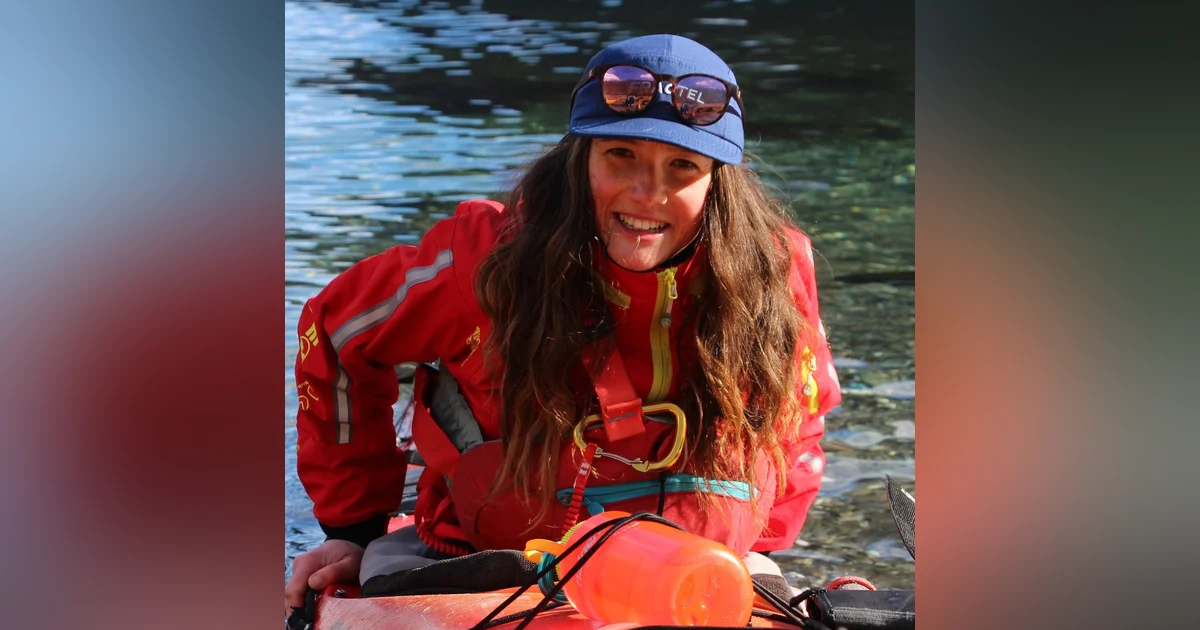
Emma Riesbeck combines sea kayaking and trail running to complete a unique version of the UK National Three Peaks Challenge, traveling from Snowdon to Ben Nevis by a mix of paddling and running.
Today's episode covers her journey from a London office career to guiding in Anglesey, Norway, and Antarctica, the emotional motivation of supporting her mother and the CoppaFeel! breast cancer charity, and lessons learned about confidence and adaptability.
00:09 - From Office to Ocean
03:43 - Rebuilding Water Confidence
06:52 - Leaving Corporate Life
10:54 - Antarctica Calling
12:56 - Three Peaks, By Paddle
19:12 - Finding Solo Strength
20:50 - Paddling for Mom
24:39 - Lessons From the Journey
28:52 - Weather, Miles, and Limits
34:48 - Confidence on the Next Trip
39:55 - Future Expeditions Ahead
40:24 - Charity Advice and Support
43:03 - Filming the Adventure
45:35 - Staying Connected
0:02 Welcome to Paddling the Blue. With each episode, we talk with guests from the Great Lakes and around the globe who are doing cool things related to sea kayaking. I'm your host, my name is John Chase, and let's get started Paddling the Blue. Welcome to today's episode of the Paddling the Blue podcast. Emma Riesbeck made some big life choices to follow her passion, and that, along with showing support for her mom, led her to overcome personal fears and doubts to tackle the UK's National Three Peaks Challenge. But this time with a twist. Emma decided to do this challenge by both foot and paddle. And today we'll talk about her experience with the Three Peaks Challenge and the path that she's taken from working in a London office to making Anglesey, Norway, and Antarctica her new workplace.
0:45 Before we get to today's conversation with Emma, James Stevenson and Simon Osborne at OnlineSeaKyaking.com continue to produce great content to help you evolve as a paddler and as a coach. And you'll find everything from expedition skills, to basic strokes and safety, to paddling and tides, surfing, coaching, documentaries, incident management, and more. And if you're not already a subscriber to OnlineSeaKhiking.com, here is your opportunity to get started. Visit OnlineSeaKhiking.com, use the coupon code PTBPODCAST at checkout, and you'll get 10% off just for being a member of the Paddling the Blue community. And for those of us who also enjoy paddling whitewater boats, be sure to check out onlinewhitewater.com.
1:26 They're offering the same discount to listeners with the same coupon code PTBpodcast. And I would love to help you put those skills to work. I offer a wide range of programs in the Great Lakes and beyond from paddling skill development, instructor certifications, workshops, CPR and wilderness first aid, guided trips, and more. Most recently, I led a trip to Alaska, and we're working on some pretty cool future trips as well. So visit paddlingtheblue.com, click the Courses and Trips link at the top of the page, and I hope to see you on the water. Enjoy today's interview with Emma Riesbeck. Hello, Emma. Welcome to Paddling the Blue. Hello, thank you. I appreciate you taking the time to join me today. So you bring quite a varied guiding history. So let's start with how you got your start as a kayaker.
2:12 I started off, I kayaked when I was younger, but on a sit on top a lot with my dad. And then really got into proper kayaking during university. I was in the Whitewater Canoe Club. So I paddled in the French Alps, Scotland, Wales, all over the UK. Throughout university, whitewater kayaking. But I transitioned into sea kayaking following some time off of work during the COVID pandemic. And since then, I fell hell over heels in love with it and just the exploration and the adventure it brings with it. Yeah. So, I mean, that whitewater kayaking experience, it's interesting that a university program would go that far abroad and into so many different countries for a university program.
2:57 This was for a society, so we were our own club, a group of peer paddlers as one, which was really special to be able to grow as paddlers and in that world together. Do you still get out and whitewater paddle much? Very, very, very rarely. I had a bit of an accident at the end of my time at university on the water, which very much made me scared of water for a long time. And for me, sea kayaking was kind of rekindling my love of being on the water and my confidence in myself and my ability, which then led to guiding, which, yeah, is a slightly different path to a lot of people.
3:38 How did you find your way back? I mean, I'm curious what steps you took to go from that scare to back to loving paddling. I really struggled following the accident and was lucky enough to talk to a coach in the UK and a wonderful, wonderful paddler, Chris Brain. And he is the happiest man I've ever met. And he was phenomenal in helping me. Almost like a therapist in some sense, but talk through what happened and steps and procedures I took that I could take to get back on the water, but also to kind of regain myself and my paddling. And if it wasn't for chats with him, I don't think I would have got back in, but he really helped reframe what it meant to me to paddle and kind of the routes I took to get to the boat every day.
4:26 We spoke through it and how things can happen and rivers can be different than you think even if you've planned it so he helped a lot and then for me it was just tiny bits of exposure and trying something new so I'd never really been in a sea kayak before and then went straight down to Pembrokeshire to kayak and just thought it was breathtaking so coming away from river paddling into something different and kind of reclaiming kayaking, in a different right helped me ease back in to what I am now. And I still have moments where, even as a guide, I still have moments where I feel, have a little bit of flashbacks, but for the most part, I, yes, the water is, well, water is my friend again.
5:07 Okay. That's good. Good to hear. So what is it about sea kayaking that has really captured your, your imagination and your passion? For me, it's the explorative side of it. And just how much you can see that not many people get the chance to, I mean, it was the same for river paddling, but. You can make it yours the river is much more committing and intense and I mean you can still make it a slow paddle but, it felt very full-on whereas sea kayak expeditions and sea kayaking feels more explorative and close to nature and I love the side of I love tidal planning I love, actually sitting down and working out a route beforehand and then being on the water and and checking it and making sure that it's doing what you expected it to do but also just how much you get to see.
5:57 And be immersed in nature when you're on the water. And then those unexpected moments as well, you know, you've, you've planned it all out, but you come across an unexpected moment and then there's that problem solving that goes along with that. Yeah. I think that's it. It's, it's, it's everything. It's very all encompassing sea kayaking of, it can be as intense as you want it to be. And you can head towards a tide race if you want a little bit more fun, but you can also bring it right back down to just, exploring by the rocks and just, you know, going out for wildlife or just simply just just being on the water and i think, it's you can make it you can build it throughout the day there's a lot more, it's very dynamic and i think that's why i love it well welcome back.
6:42 Thank you very much no it's very good to be back so as i mentioned you got a really varied history so how does one go from business evaluation to construction management to sustainability consulting to outdoor guiding. Um I I think like most young people like most people I guess you go to school and you think you know what you want to do and you're kind of rushed through university and, I actually grew up in Dubai and so, I have a slightly different upbringing to what my my brother did, and I think if I hadn't have grown up there maybe I would have found this career earlier, but for me I grew up in Dubai and had always been passionate about time on the water. I scuba dived a lot.
7:30 I got out as and when I could, but not as much as I do now. So not as much as maybe I wanted to. But I fell into or thought I wanted a career in property. And so I went to university, studied really hard whilst whitewater kayaking, but found myself in London. And as someone that now spends most of their time in a tent, it's quite funny looking back I've been thinking about how I was in a suit most days and then heels and worked in London. And that seems ridiculous to me, but there you go. And I transitioned into sustainability because for me, property and working evaluation wasn't, it wasn't me. I didn't feel inspired to go to work. I didn't feel like I was doing something positive, whether that be for the planet or the people or just anything. I felt very stuck.
8:18 And so my training was in sustainability instead, which was a lot better because it felt very positive and it felt like I was making a difference every day. And that is very much what I want to be and who I want to be, someone that makes a difference. And it was good, but it still wasn't me. And I wasn't, I love people. I love making a difference. And for me, it didn't feel quite right. So during furlough, I was given the opportunity to leave work or to have time off work. And i did an outdoor instructing course and very much got back in a boat and just fell back in love with, or fell in love with guiding and being on the water and just getting to make a difference in a different way, um and since then i went back into sustainability but still something wasn't quite right and eventually my partner said he was coming back to norway to guide and where we do, multi-day sea park expeditions week after week after week for a few weeks during the summer a few weeks during the summer and he said why don't you come and try it you seem happiest when you're outside you seem happiest when you're talking about, your past and leading on the water and whatnot and why not come back with me and give it a go and I said sure and I've been here since so yeah very much back on the water and guiding, every as much as I possibly can since So I've left corporate world behind for now, hopefully.
9:41 Well, that's fantastic. Congratulations. So tell me a little bit about your guiding activities. So at the moment, I am currently in Norway. I've done three seasons here doing multi-day sea kirk expeditions with a little bit of hiking thrown in. And I've also done it back home in the UK, but I've just done the past three seasons here, which is wonderful getting to introduce people that from all walks of life, from I think the youngest has been two to 82 I've had. So a real variety of people taking them kayaking and exploring the Norwegian fjords and the mountains around here as well, which is spectacular. A little bit less spicy water than where I live on Anglesea, but still, yeah, really interesting, really varied nonetheless.
10:24 Okay. And I'm lucky enough on top of that in the winter to have started working down Antarctica as well. So the variation is pretty wonderful. That is, that is quite a variation. So now how did you get started in Antarctica? It was my partner's dream for a long time. And I've always known of people that have guided down there, many that have also been on this podcast, Amber and Kelly and whatnot. And I've always kind of looked at their photos and heard their stories and just been in awe of it. And so he was given the opportunity this year and I thought, or last year even, and I thought, well, you know, soon I will apply, soon I'll start applying. And then we were lucky enough to be given the opportunity. He needed an assistant.
11:07 And he said, I know just the person. So I was very, very lucky to have been given the opportunity not only to work down there, but to be able to guide alongside him, which is very, very special. That's great. That's great. So now what kind of what kind of training aside from the kayak specific training, the paddle specific training, what do you need in order to guide Antarctica? Oh, I have my powerboat. So usually lots of powerboats because you are. In order to kayak down there as part of IATA rules, we have to have a Zodiac alongside. So no kayaking rescues, you're just straight back on the Zodiac and taking them out if they capsize. Um and then also stcw and first aid so having to be say like safety c down there so firefighting the security there's first aid training all looped into this stcw, and then on top of that kayaking qualifications as well okay.
12:01 Are those readily available i mean are there are there a lot of places where you can go and obtain the powerboat certification and the stcw there is a fair few particularly where we're based on Angler Sea for powerboats. STCW, there is a couple around the UK and I think a couple in Europe and America and whatnot that allow you to obtain it. But it's anytime you're working on a cruise ship, a bigger boat, a yacht, there are requirements for that qualification as well. So there was a fair few people at my training. Now, so you've combined a solo sea kayak expedition with the National Three Peaks Challenge. So I'd like to talk a little bit about that. But first, tell us, what is the National Three Peaks Challenge? So we have our three tallest mountain in the uk so uk is made up of england scotland and wales we have oiver or, snowden in wales scoffel pike in england and then ben nevis in scotland and our national three biggest peaks in each of those countries and i'd actually never done them before well i'd done snowden plenty of times in scoffel pike before but i'd never never done the three another Dunn-Ben Nevis.
13:06 So Ben Nevis, Scullfield Pike, Snowden, and you had another name for Snowden. It was, sorry, it's a, the Welsh name. So I live in Wales, that's the Welsh name for Snowden. I hope I'm pronouncing that right as well. It'd be terrible if I wasn't. All right. And is there a time limit that you have to complete the Three Peaks Challenge? Traditionally, people like to do it in 24 hours. So that's driving between the three. It's a big thing of kind of driving between them all. There'll be a lot of guided trips up there to help people reach all three in that time. So it tends to be a challenge of the national challenges, yeah, within that 24-hour timeframe. But that's lots of driving between them all as well, because it's not a short distance.
13:49 So now what does the combination of a sea kayak expedition and the Three Peaks Challenge look like? I wanted to do a sea kayaking journey for a long time and something to challenge myself. So for me, when I read about Nick, Nick from Life Afloat's journey of the Three Peaks, I thought that was fascinating and how cool it would be given that I am also a trail runner and I love to run and I love silly distance running. And so for me, it felt like a way that I could do, something to really challenge myself but also combine my two loves of trail running and sea kayaking and push myself in both of those areas and have fun on the way was the idea so I set off from Khamberis in, North Wales I up the summit Snowdon.
14:34 And ran up there very early in the morning and ran straight down towards the Menai Straits. I was lucky enough to be put up by Plasmenau, which is a national outdoor centre over there on the straits where I met my boat and had a safe in the night before paddling, starting my paddling journey up, towards England, which was very exciting. And so what was your route like? So I started down the straits. I hopped on very early in the morning and paddled to where I live, just at the other side of the Menai Straits. I believe a couple of people I've spoken about the Mennay Straits on the podcast before, but it's quite tidal. Good bit of fun. Some fast flows through there. So I got a good boost, like a conveyor belt, and then headed straight over towards Clendidno and the Great Orme and kept going up via Liverpool docks, which was a new experience for me, paddling in a shipping lane that big, up the docks.
15:25 Up the shipping lane even, and over and working my way up the country via blackpool to the lake district, where I ran from my boat through through the lakes to the summit of Scarborough Pike and back down to my boat again so I was hoping that I would camp a lot more and that was the original idea but, I didn't do it as much as I was hoping to which was a shame but also one of those things that like with the sea kayaking is very dynamic and I just had to make assessments how it was feeling at that point so from Scarfell Pike I kept paddling a little bit further north via Morecambe Bay and then over, over the Solway Firth to Scotland and headed up the country towards Benavis. Okay.
16:12 So your paddle route was basically replacing the driving that people would normally do for the three-peak challenge. Yeah. You do normally drive a lot more inland via the motorway, which is a lot quicker. I realized on the way home, it took me, what, 20, 22 days to get up there and it would have took me about eight hours to get home, which is really, really rubbed it in. But yes, the idea was that I could go via the mountains on my way up nothing was particularly by the coast it was all a little bit of a run in nothing too bad, Yeah, added a little bit to the journey and added a little bit to the change. I did not run to the top with my boat, which is what most people ask. Did I take my kayak to the summit? No, I did not.
16:53 That was an interesting way to do it. And I loved the idea of piecing together something slightly different and just changing it up a little bit and just having those different environments on the way. And I have to say, I didn't realize how beautiful some parts of the UK were that I think we all, well, certainly me being British, I didn't realize that they exist. Did to be honest and i didn't realize how beautiful they were it was helped by the fact that i had some wonderful weather for the majority of the journey i was very very very lucky, good good now you mentioned that you'd hope to camp more what did you do outside of camping if you weren't camping how'd you how'd you stay i was lucky enough for my partner to follow me so i struggle quite a bit with self-confidence, in sea kayaking particularly from my accident just because i think it's always in the back of your brain no matter how much you go through about improving it was always kind of hovering.
17:46 And this journey was not just for me to raise money and not just to do something that challenge that was new and exciting but also that challenged myself in that space so it was a big deal for me and, I struggle with self-confidence outside of that as well and so for me I thought I'm going to trim it back a little bit and not camp unless I really feel up to it. I think it was enough. In hindsight, looking back, I wish I'd camped, but hindsight is a wonderful thing. And at the time, it felt plenty to just do what I was doing. And so I was lucky enough for my partner, Johnny, to follow along in the van and help out when he could, but leave me to my own devices when I needed to camp and have that headspace to just be out there alone as well.
18:26 Okay. So part of this journey was continuing to rebuild that confidence. Yes. Yeah. Okay. Very much so. So you mentioned that there were some areas that you just thought you hadn't even expected the beauty of those areas. Can you tell us a little bit about that? Yes, I paddled up through Blackpool and even through Liverpool. And it was incredibly helped by the fact that I had incredible weather for the first few days. But I never expected Liverpool and everywhere else to just be as stunning as it was. Now, as I was paddling up through the Liverpool shipping lane, there was north of 40 seals. I saw poppuses. I saw lots of different animals that I just thought, oh, this is the shipping lane. And I wasn't expecting that.
19:11 And then beyond all the way up the country and it sounds ridiculous but i know geography and or the do the geography of the uk, i'm i'm aware of it all but i didn't realize the lake district had a coastal environment which i knew it did but i didn't realize it was as stunning as it was and it was so special to be able to experience those places when it was relatively quiet as i did my expedition in april april to may, and so it still wasn't as busy as the summer holidays and And so it felt like when I was out on the water solo, it felt like it was mine. And it was absolutely breathtaking to be able to see those places in the sunshine, which was definitely a big help, but see just the beauty that is the UK.
19:51 And I think people forget that. We all go on holiday abroad, but there's actually incredible places right on our doorstep. Yeah, we forget that sometimes for sure. Yeah, for sure. So why solo on the water and on the mountains? Um so the the expedition was actually inspired by my mum now my mum just had cancer and she's had it a number of times throughout my life but she just had it once again breast cancer and was undertaking chemotherapy and she. Kept saying how how rubbish it was and how unbrave she was and if anyone told her she was brave she wouldn't believe them but to me my mom is one of the bravest people because she's been through this a number of times and, when she was told she had it once more i'm gonna have to have chemotherapy she just took it on the chin and got on with it and i see that as very brave but my mom doesn't, and so i wanted to do something that showed her that because she is the way that she is that i can be strong too and, I wanted to do something that challenged myself because she can't missy she's not very outdoorsy in the slightest she's a very much a fashionable mum shall we say um but there's shopping to being outside which is wonderful and she's getting there she likes to walk and stuff like that but she's she's very different to the person that I am when I'm at work, And so I wanted to do something that would show her that I am pushing myself as well. And actually, she is a big inspiration for that.
21:15 So I'd not done anything solo. I've guided. And obviously, when you're guiding with clients, you're somewhat solo by yourself. But I wanted to do something that put myself out of my comfort zone in big crossings, big water for her as an inspiration. And for me, I wanted to do something that gave back as well. So the team that was incredible to mum were phenomenal and always have been and but during chemotherapy she was utterly shocked at how many young women there were in that room that didn't really know. Anything about cancer before they were thrown into that that realm and and so I wanted to do something for charity that gave back for them because she she pointed out countless times and My mum was one of those people that, or is one of those people that she.
22:03 Wouldn't talk about herself. She wanted to talk to other people, wanted to make sure they were okay above her. And I thought it was wonderful how she just spoke to these young people with so much, so much just admiration for them and wanted to do what she could. And so I did the paddle for Copperfield, which is a young person's breast cancer charity in the UK, helping to raise awareness and help the people that are going through that. That's wonderful. And doing the paddle in honor of your mom and her fight. Yes. And supporting Cabafel. So we'll make sure that we put links in the show notes for folks to be able to check out Cabafel and make their donation as well and continue to support in a different way, but similar than you've done.
22:44 No, it was wonderful. And it was wonderful to be able to fly that flag. I was very, very lucky to have been given a pink P&H Scorpio for the challenge. So very much flying the pink flag with my boat as well which was which is beautiful that's super super now how'd you like the boat, yes it was fantastic i paddle with scorpio fairly regularly anyway so it was lovely to have a pink one and to yeah to celebrate copperfield and, they say tickled pink and for breast cancer and about to fly that flag and just yeah to have something that reminded me every time i looked down that what i was doing and why i was doing it even when i was quite scared because of the big water or the big long crossings.
23:25 It was just reminding you kind of why on earth I'm doing this and whom I'm doing it for. And that, yeah, I can be brave as well. Super. And there aren't many pink P&H boats out there. They make those special. Yeah, absolutely. So what went well on the trip other than the weather? Yeah, that was a big plus. I think it was a great reminder that, You can do things scared. I think that went really well. Some days the water was very big. I had a very big first day. Lots of surgy, surfy, dumpy waves going on for a very long time as I crossed from Biamaris on the Angra Sea over towards Clangdidnia and the Great Orme, which was a long 12km crossing, if I remember correctly.
24:12 And it was a big, big tailwind, but the corp was causing quite dumpy, surgy waves. But just even after that just reminded that you you you can do things and I think that was that went well but also my tidal planning it was wonderful I absolutely adore tidal planning and, just the gratification you get when you get on the water and you've done it right, and I think that's such a wonderful feeling to be like yes and yes the water can change what it wants to do and the weather I know full well as a guide that it does whatever it wants not whatever I want it to do, but that the kind of the satisfaction you get when you know you've planned well um and, that went really well and I think just how much I ease into it I went into it kind of nervous which sounds silly as a kayak guide because I shouldn't be nervous to go for a paddle but like I said, I'd not really have the self-confidence to do things solo solo in that sense but I think what I learned about myself and my family.
25:16 Belief in myself and my confidence as i went on was phenomenal and and yeah. I i was really proud coming out of it that i'd done that it didn't feel real and i think in some sense i still don't feel, like it does that i could have done something like that but for me i just leaned into it and i i run ultra marathons as well so i love endurance i love, going into the pain cave the suffer fest and just keeping going and so for me in the end it was covering 60 kilometers a day, and i loved it i loved racking up the miles every day and just yeah paddling over for breakfast in scotland from england was the most incredible thing with a beautiful sunrise as well, that's wonderful now that you mentioned 60k days what was your biggest day, i think it was just, potentially just north 60k so not nothing too crazy but i originally had expected and i said to james from online sea kayaking and i had planned about 30 40 kilometer days thinking probably that would be, my max but i just the moment i got in the water loved it and i loved, pushing myself and every day when i thought oh i'll probably just do 40k i'd turn i'd message my partner and say scrap that i'm i'm gonna do another extra little bit and, i just found.
26:38 So much peace outside and so much joy and just, getting the miles in and just seeing what i could do and eating well and fueling well i think that was one of the biggest things for me that went well was, just how well i fueled because it really really kind of reiterates that food is fuel because the more you eat the further you can paddle which was great because it was it was basically just a A paddling, eating and running time, which was the best time for me. But it was, yeah, I think that was one of the best things about it was just how much more I could do and how much more than I thought. What was your go-to fuel on the water? I have to say I ate a lot of cereal bars.
27:18 I don't normally, and now I don't want to look at them. But I found that cereal bars, I eat a lot of peanut butter. I'm usually known for eating so much peanut butter. So that for me was quite a big one. But there are a few cereal bars now I don't think I could look at yet. And it has been nearly three months away from it, but I still don't think I'm ready to see a cliff bar. That's probably too soon still. All right. Now, how much time elapsed for the trip total? I believe it was 22 days. I say that, I should know this with confidence, but I've been in guiding mode for three months now, but it was 22 days. In the end, I only had one rest day, which I was expecting, again, to have a lot more, but I just said to my partner, Johnny, every day, I just, I love it. And I was trying to work with the weather.
28:06 I was very, very grateful because it meant that I could have days where I could push a little bit more and do a little bit more than I would have done if it was windy. I got blown off course quite a few bits. I came due to the weather. I actually ended up running a few sections, which I really, really would like to go back this year or next and tick them off paddling. But for me, it wasn't a mission that I had to paddle it all. And it had to be, you know, meter by meter perfect. It was a journey where I wanted to get there. And do it in a time frame that worked for our guiding commitments, but do it in a way that challenged me. And I think I spent a while afterwards being annoyed that I'd had to run some sections.
28:49 For example, the Mulligallo way, I didn't manage to paddle that section, which was going to be big. And I jumped on the water one day and it was quite big, very big and possibly a little bit too much for me when I was that tired. And so I decided to run that section instead. And so I made up the miles, and if not longer, because it takes a lot more out on your body, or certainly my body, to run. But it meant that I could keep moving and that I could keep positive about it rather than sitting out. I didn't want to have too many rest days. I wanted to keep moving if I could, because I was aware that we were leaving to guide shortly afterwards. I think you made a really important point in there, and that is knowing your limits and having an alternate plan and being able to have the fortitude to say, I can change my plan to do whatever's different, and I can come back and paddle that location on a different day when it looks different and meets my needs.
29:48 Yeah, I think that was probably one of the biggest learnings and something that I still struggle with because I'm very quick to dismiss it. When people talk about it, I say, oh, you know, I didn't paddle that section though. It's clearly struck a nerve in some sense with me, but also So I think it's a good reminder that plans don't always go to plan and that actually it's no one else's expedition. It was mine. And it looked like what I needed it to look like, which was being not necessarily being on the water that day. And I tried. I got on. But it was far bigger than I hoped for. And I knew that I was hitting some very tidal sections and some tide races. And I didn't want it to kick up a notch because...
30:31 Wasn't necessarily going to be the best outcome for me and I think, even though I am annoyed about it in some sense it's also been a great learning like you say things don't always go to plan and you have to be dynamic and that's the very nature of water it's dynamic and it does whatever it wants and you have to be dynamic with it so I'm quite proud of myself for making those decisions but I still maybe have somewhere to go in terms of reminding myself that even though I can talk about it it's actually it was okay to change it and i never said that i would paddle every single section i said, that it is a paddling and running expedition and that's what it was and so i think that's definitely something maybe i've learned from it but i'm also still learning from it yes and we always will learn but again congratulations on making that making that decision and knowing that you've got choices and being able to to have that flexibility so what did you not anticipate on the trip, i didn't anticipate the weather would be that good to be honest i gave myself a few extra days.
31:31 I guess i didn't anticipate how far i could paddle a day i think i underestimated myself which as a lot of people often females particularly and do we kind of don't believe we can do as much as, we can and i think i definitely didn't anticipate that I feel like I fueled really well I prepared really well and my tidal planning wasn't, it was hard to plan when you didn't know what the weather was going to do for that long period of time so it was just over 750 kilometers and so it took. You know, I could check the weather and plan everything, but actually it wouldn't always work. And so there was a few times where we were frantically, or I was frantically planning and getting my partner to have a look over it as well, because I wasn't sure.
32:16 And we didn't necessarily have the information for those sections. And I think I probably definitely could have prepared a bit more, but I was also very lucky to have been given the opportunity to guide in Antarctica just before. And so in hindsight, if I hadn't have gone to Antarctica, I would have been prepping a lot more over Christmas and New Year into March but I was given an opportunity and I think it made it more dynamic as well if I had to do, everything was a little bit more rushed to begin with but also it still went and it was still okay and it was still wonderful and I think it was a nice reminder that doesn't have to be perfect, it just has to be safe and enough and you have to have all the all the things ready in the background but you don't have to get everything in motion yet which i think was a good reminder that of the dynamic nature of, of expedition paddling yeah getting getting there is only half the equation getting back is the other half and the most important half yeah absolutely and i think, that you can be i could have been as ready as i want and i still don't think i'd have been ready so actually being able to be a slightly more dynamic and.
33:22 It made it some days a little bit stressful for myself and my partner johnny but also it was my expedition and i'm i'm so proud that i was able to just, you know acknowledge the fact that i'd stress myself out a little bit but what an opportunity i was given, as a reason to stress myself out for and and so yeah it all went it all fell into place and it was it was amazing that it good what did you learn and what would you do different on your next expedition, i think i would Yes. Tell myself how much more I can do. The amount of times that I was going through tide races that often have the word notorious in front of them by other people.
34:05 I make that in my head so much more than I need to do. And then I get on, like Doris Moore, for example, towards Eibon in Scotland is known for being a notorious tide race. And in my head, I got a bit overwhelmed by it. And then when I was paddling through it, looked on the map and realised I'd already paddled through it and I didn't need to get that wound up in my head. And that was just me to a tee of how silly I was to do that. And I think I learnt a lot that I can title plan. I know I can. I'm a very good title planner. Why on earth would I ever think that I was going to go through it on a big when it was stupidly big? Because I knew I wouldn't. So I learnt a lot about myself in that respect because I shouldn't be a plonker as we say in the UK.
34:52 That what I would do differently is definitely believe in myself more and just, yeah just stop being silly and just just do it in a way that's safe and and good but believe in myself a heck of a lot more and just, get on with it and push and try and I think it was wonderful one day where I did get on and, I got off halfway through where I was meant to go I was meant to cover 20 kilometers if not more as an as an extra little add-on of the day and I got straight off and had to run that section and I just think it was nice to just realize that nothing matters actually if you get on and you fail you can get off again and I can control that and I can I can manage that and I think that's yeah, it was that's what I would do definitely is definitely not listen to sometimes not listen to my brain a little bit.
35:41 But also, I would have camped, I think, possibly a little bit more than I did. Not always, because I think sometimes you don't need that added stress, but also I do wish I'd done it better. But also, I don't know who that better is for, because it was my expedition, and I did it in the way that worked for me, and everything went well. But part of me does wish I had camped a lot more, but also it doesn't matter. There'll be plenty more expeditions to come. We've already got planning lots of different ones that's right and it is your expedition as you'd mentioned certainly what's what's next, um at the moment we i am in a way guiding before heading home to work we just started our own sea hiking business doing our own expeditions.
36:25 And having the opportunity to work together my partner and i so we'll be doing a lot more for us um but then I would like to go back and do the sections that I missed because I think that would mean a lot to me just to be able to prove to myself that I, can do it and it's not for anyone else it is for me but we also have a number of expeditions we're kind of looking at towards Antarctica and Scotland and, anywhere really the two of us are very much, yes I now I have that confidence i'm looking to push myself both with my partner and with friends but also just, with myself as well and i think i want to do a lot more solo because i think it's a wonderful thing to realize, realize for yourself that you are better than you think good now any uh are those expeditions that you're thinking of expeditions that you would guide or that you're thinking of doing either yourself solo or you're along with your partner.
37:22 We have a number of ones that we want to guide or we will be guiding this year, in Scotland planned so I get back home in two weeks time from Norway and straight up to Scotland and doing trips around RSA and whatnot. But there are a number of trips that we won't have in our pipeline for us because I think, It's really hard when you do such an incredible job and you are able to share the water and give that experience and facilitate that experience for others. And it's such, I'm so, so grateful to be, have a job where, you know, I get to play on the water every day. And I look forward to it all the time, but we do need to remember that we have to do stuff for us as well. And it's not just, can't be just guiding.
38:03 So we're hoping to get out and do a few big expeditions just as well, for sure. And then the hope is that this year I'll be able to work towards my C-CAT coach as well. So fingers crossed. Care to share any one of those big expeditions that you're thinking about? We were looking to do the inside passage, but I don't think timings will work out this year, next year. But... He has a habit of sending me lots of different ones. So we're looking somewhere down Antarctica, which would be rather incredible. And also the outer Hebrides as well. So hopefully something big coming soon again to fish myself. All right. Wonderful. So you mentioned earlier you did your expedition in honor of your mom and in support of Coppapheal.
38:47 What advice would you have for someone considering a similar charity expedition? I think reach out and talk to them it was wonderful to have their support as well um and to be able to make an impact for them it was lovely having another purpose as well as my own of just doing it for me actually doing it, on behalf of a charity to remind you that even those days where you feel rubbish you know, you're tired you're fed up of eating cereal bars that actually everyone for me everyone like my mum was going through something and had to be brave and had to be strong and didn't have an opportunity or a choice, to say I'm not getting out that day I don't want to do that and in kayaking you know on an expedition you do I could have said I don't want to join the water that day I'm not interested it's rainy it's windy I don't want to push myself but I think, doing it for charity helped me remember that actually even when you're tired, you sometimes just have to do things.
39:45 Some people don't get a choice and I'm so grateful to be able to have the choice to be able to get on the water every day and paddle And so, yeah, it was a good reminder. And so I would recommend, highly recommend going for it and doing it for a purpose bigger than your own because it made it all the more special. As someone going through chemotherapy or any other cancer treatment doesn't have the choice to not do it. Yeah, I think that's it. That's what you do, but yeah. Yes, yeah, you kind of do. But also, I think you don't have a choice to say, and I don't want to wake up and face this today. You have to face it. And even the days that felt tough, it was amazing to have, almost to harness their power and their bravery behind them.
40:28 Behind me as well because I was doing it for something bigger than just me and I think that felt really special and I don't know to be able to to fly their flag, and do something amazing for it good now um how much did you raise i raise three thousand eight, hundred and twenty pounds so far so a lot more than what i originally expected wonderful that's hope is that i can continue to raise it and i'm very was very lucky to be given the support of online sea kayaking so they are making uh some of the footage into a documentary and so hopefully, that story will continue to be told um and not only slightly more money raised but also So more knowledge shared and hopefully more encouragement for people to check themselves and, check out for themselves as well and check in with themselves. Yes.
41:17 So that footage, you mentioned it was being made into a documentary. Share how that process goes. We're very lucky to have been given the opportunity with online sea hiking. So I submitted. What my plan was for the expedition and alongside Justine was given Grant from Online Seek Hiking. So I met with James in the Sun train. He gave me a GoPro or a camera and a microphone. And now I mentioned that I don't always have the most self-confidence. I also don't really like pictures. So as you can imagine, filming yourself was a little bit more intense.
41:58 But it made it more of a challenge for me personally not only did I have to kind of get up every morning and run and whatnot but also I had to film myself which arguably was one of the hardest parts I have to say, that the process was yeah that I would film myself and film the highs and the lows and, kind of what I was doing day by day and I was lucky enough that we have a drone alongside of it so we have some incredible drone shots of just how lucky I was with the weather, but also, just how incredible the UK is, which was really special to be able to capture those. And so every morning I would film myself and explain what I was doing that day. And I had some days where one memorable day where I sat on the floor of a car park crying because I was tired because I definitely underfueled that day.
42:47 I definitely hadn't eaten enough and I wasn't having a good day. So I think the footage should be interesting of the highs and lows. Should be some interesting stuff. And filming on big water when I was probably out of my comfort zone or slightly, you know, getting close to my comfort zone, if not past it, was interesting. I think you'll hopefully hear my different voices where I'm comfortable and when I'm definitely not. Well, I'm looking forward to seeing the expedition on film. When do you expect that to be available? i'm not sure i met with james just before i came back up to norway and so the footage is with online sea casting now, and they are putting it together into the film just a short film and i'm not sure on time frame wise because they are launching other new platforms and whatnot as well so very lucky to have their help.
43:41 But i will yeah definitely update people on social media and whatnot as and when it does good well james and simon are good good folks over there and glad they were able to help you out and help make your expedition happen and well like i said we'll look forward to seeing that once that's available we'll include that in the show notes and then of course as i mentioned we'll also include the uh, the link so folks can donate for themselves so as we as we wrap up here how can listeners connect with you, um i available either social media and my personal one is emma reese and then r-e-a-s um but also my business website which is passageguiding.co.uk, and we are on social media on Instagram and Facebook as well at the same handle, excellent well like I said we'll also include those in the show notes so folks can connect with you and ask their questions as well and learn from you about your expeditions how you continue to build your confidence how you give how you've been giving back to the sea kayaking community and to the cancer community as well so thank you very much for that, one final question for you who else would you like to hear as a future guest on Paddling the Blue?
44:45 And I am a big, big fan of the podcast. It was with my ears throughout my paddle and it always is. Thank you. But I have a wonderful friend, Marielle Guggero, who is an incredible stand-up paddleboarder, canoeer, kayaker, who I work, I'm lucky enough to work with down in Antarctica. And she has been on some incredible journeys, solo, and with her husband, Ben. And she just has a wonderful view on life and such a poetic, nature that I think should be to be wonderful to talk through her expeditions and her why and what she takes from paddling and on the podcast, super well thank you very much for the referral to mariel we'll uh work with you to connect with mariel and and have her on the show and learn from her experience as well, so emma thank you very much for the opportunity this has been wonderful learning from you and hearing about your guiding history how it got you to guiding and then your experience with the National Three Peaks Challenge combined with paddling.
45:41 So thank you very much. I appreciate you. Ah, thank you very much. It was lovely to talk to you. If you want to be a stronger and more efficient paddler, Power to the Paddle is packed with fitness guidance and complete descriptions along with photos of more than 50 exercises to improve your abilities and enjoy your time on the water. The concept and exercises in this book have helped me become a better paddler and they can make a difference for you too. The exercises in the book can help you reduce tension in your shoulders and low back. Use the power of your torso to create leverage and use less energy with each stroke. Use force generated from your lower body to make your paddling strokes more efficient. Have the endurance to handle long days in the boat. Drive through the toughest waves or white water.
46:23 Protect your body against common paddling injuries. And while you're at it, you might even lose a few pounds. And who wouldn't mind that? So visit paddlingexercises.com to get the book and companion DVD. Congratulations to Emma for completing her version of the National Three Peaks Challenge and for her support of CopaFeel. Visit the show notes for this episode at www.paddlingtheblue.com slash 172, where you'll find notes referenced during the episode, including how you can donate to CopaFeel and help crush breast cancer as well. And you'll also have opportunities to contact and connect with Emma as well. Emma mentioned a grant she received from the folks at OnlineSeaKayaking.com, and I wanted to send a thank you to James and Simon for creating their Expedition Support Program.
47:07 Through this program, they provide financial assistance, media equipment, and documentary production to be featured in the Online Sea Kayaking Library to selected paddlers. And it's an annual application process, so stay in touch with OnlineSeaKayaking.com for future grant opportunities. And by the way, if you're not already a subscriber to OnlineSeaKayaking.com or OnlineWhitewater.com, use the coupon code PTBPODCAST to check out at either of those websites and you'll get 10% off just for being a member of the Paddling the Blue community. As a reminder, you can find programming and trips from me at paddlingtheblue.com, and I hope to see you on the water. As always, thanks for listening, and I look forward to bringing you the next episode of the Paddling the Blue podcast. Thank you.
47:50 Thank you for listening to Paddling the Blue. You can subscribe to Paddling the Blue on Apple Music, Spotify, or wherever you find your favorite podcasts. Please take the time to leave us a five-star review on Apple Music. We truly appreciate the support. And you can find the show notes for this episode and other episodes, along with replays of past episodes, contact information, and more at paddlingtheblue.com. Until next time, I hope you get out and paddle the blue.