#169 - Developing paddling skills and confidence and listening to yourself with Elaine Shooter Alexander


 Apple Podcasts

 Spotify

 Overcast

 Castro

 PocketCasts

 RSS Feed
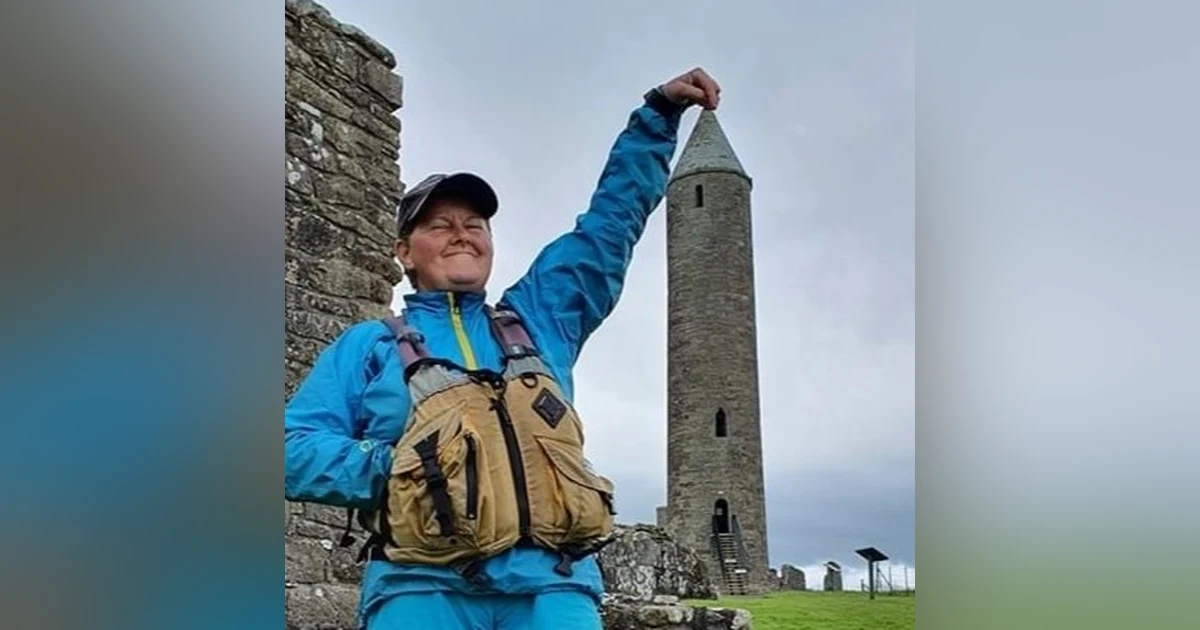
Elaine Alexander, or Shooter as she is known to friends, joins today’s episode of the podcast to speak about her late start in paddling, training and teaching at Share Discovery Village, and the determination that led to a solo circumnavigation of Ireland — 71 days with 51 on the water, stormbound moments, and life-changing encounters.
The episode highlights the generosity of coastal communities, the support network that made the expedition possible, Shooter’s fundraising and advocacy work including Summit to Sea for MND, and SHARE’s inclusive outdoor programs.
Website: Share Discovery Village
Traditional Greenland Games at Share
00:09 - Shooter’s Paddling Journey
02:42 - Instructor Training Begins
05:52 - Back to School
08:54 - The Nickname Shooter
09:12 - Planning Ireland’s Circumnavigation
14:37 - Ulster Practice Expedition
20:46 - Ready for Ireland
25:01 - Kindness Along the Coast
29:42 - Social Media and Support
30:41 - Why Circumnavigate?
34:16 - Sea to Summit Tribute
41:06 - Inside Share Discovery Village
0:02 Welcome to Paddling the Blue. With each episode, we talk with guests from the Great Lakes and around the globe who are doing cool things related to sea kayaking. I'm your host, my name is John Chase, and let's get started Paddling the Blue. Welcome to today's episode of the Paddling the Blue podcast. Elaine Alexander, or Shooter as she is known to friends, joins today's episode of the podcast to talk about her growth in paddle sports, deciding she was ready to circumnavigate Ireland, and her involvement with Summit to Sea for MND. Before we get to today's conversation with Shooter, James Stevenson and Simon Osborne at OnlineSeekHiking.com continue to produce great content to help you evolve as a paddler and as a coach. You'll find everything from basic strokes and safety to paddling in tides, surfing, coaching, documentaries, expedition skills, and incident management, and more.
0:50 So if you're not already a subscriber to OnlineSeekHiking.com, here's your opportunity to get started, visit OnlineSeaKhiking.com, use the coupon code PTBPODCAST to check out, and you'll get 10% off just for being a member of the Paddling the Blue community. And while you're there, be sure to check out the community section where you'll find an interview with me. A big thanks to Simon and Daniel for hosting me on one of their meetups. And for those of us who also enjoy paddling whitewater boats, be sure to check out OnlineWhitewater.com. They're also offering the same discount to listeners using the same code PTBPODCAST to check out. And I'd love to help you put those skills to work. I offer a wide range of programs in the Great Lakes and beyond from paddling skill development, instructor certifications, workshops, CPR and wilderness first aid, guided trips, and more.
1:35 In fact, on the day this episode comes out, I'll actually be leading a group in Alaska. So visit www.paddlingtheblue.com, click the courses and trips link at the top of the page, and I hope to see you on the water. Enjoy today's interview with shooter alexander hello shooter welcome to peddling the blue, Hi, John. Thanks for having me. Absolutely. Absolutely. This is going to be fun. I've been looking forward to this. We've been talking for a little while here about getting together, and Robert Henshaw introduced you to the show, and I appreciate you taking the time. Yeah. Hopefully, I'm looking forward to it. Well, great. So, let's start with how did you get your start as a paddler?
2:21 I started quite late into the paddling. I think I was 20 years old. I was on a college course. Part of that course had the kayaking module. The first experience I went out kayaking, I had to be towed back at the end of the session. I couldn't get myself in a straight line. But thankfully 10 weeks later, I was able to paddle in a straight line. And then from that, I went on to do a trainee outdoor instructor course which was based over in Fermanagh that was a one year trainee course we had six months of training and then six months of work so during the six months of training, there was plenty of opportunities there to go paddling, we were introduced to canoes, surf kayaking sea kayaking, and the center being based the shannon air system meant we could go away and get loads of camping trips, and the other the other good thing in chair was my boss robert livingstone was also a paddler and he then introduced me me to see kayaking over on the west coast, of ireland so in the early days i was given plenty of paddling opportunities while i was working at the center, so that that That training course, the instructor course.
3:35 Well, first of all, congratulations on keeping that straight line. And then you went from learning how to keep that straight line to the instructor course. How much time between that? It was probably six months. Okay. The college course, and then we started in September, the training course. So we would have trained from September to March over the winter doing skills. So I really, I could paddle on a straight line after 10 weeks in the college course, but all the rest, you know, I spent the winter in taught skills and stuff. Yeah. So now that's interesting. You said it was a year long course. Tell us, tell us about the structure of that year long course.
4:16 It was brilliant. The Shares Centre had been running it for a number of years. So you came in September, you did six months training in all the hard skills you were taught in paddling, sailing, wood surfing, power boating and then all the land activities. You spent the winter out training and then during the summer from March to the end of August, we then worked with the groups looking through the centre. So we did the hard skills in the winter and then we put soft skills for six months working with schools and different youth groups and other organisations. When you put the two together you felt like an outdoor instructor at the end of the year.
4:56 Of course, during the six months when we worked with the schools and the different groups, we would have taken weekends or evenings and stuff. We would have had the kayaks loaded in cars and just headed off to the beach, or headed off to the rivers at the weekend and just continued to go through the courses. So were you working at Share Discovery Village prior to starting that course? No, I started in Share in 1995. Okay. Did the outdoor course, the year's training. I did another year's training course after that. And then I was employed for three or four years. And then one of the winters, I was out kayaking, river kayaking.
5:38 And probably I was on the reeling, a river I probably shouldn't have been on. But I took a swim, hurt my knee, and then that ended the paddling for a couple of months. I had to get an operation through physio to get it loosened up. But during that period where I couldn't get in the water and do stuff, that's where I decided I needed to go and get myself a bit of education. So I went back to uni and I did a degree course. And after the degree course, I then worked in a couple other outdoor centres, one on the east coast over in Carlingford direction. And then I worked over on the west coast for two summers at Actal Outdoor Centre.
6:19 And then after that, I came back to share. And Robert, the boss at the time, he offered me the position then of running the outdoor course. So I was now the person in charge of delivering that. And I did that outdoor course pre-COVID for 17 years. Well, that really came full circle then, from student to teacher. Yeah, it was brilliant because whenever I got to deliver and run the trainee program, I was taking in 10 trainee instructors each year, and you'd bring them from scratch right up to being their canoe instructor or kayak instructor.
7:02 Well, congratulations. I enjoyed the work. Excellent. Excellent. Well, congratulations on that. So that's a pretty comprehensive program. And when you first mentioned it, I was thinking that it was just paddle sports. But you said sailing, canoeing, kayaking, windsurfing, everything. Yeah. Every activity that we delivered in the center, you were trained in that. You were brought up with the ethos of the center because we were a Charlie Outdoor Center. And we worked a lot with special needs. So it was important. The training instructors when they finish their train and say come march that you trust with them to go out take groups out make sure they're having fun and they were safe while they were doing it, super well we'll talk a little bit more about uh about share discovery village and the work that you do there and and that in a little while, but let's talk a little bit about a bar of a couple other things before we get to that so first your your nickname shooter how did you get the nickname shooter.
8:07 I thought you're probably gonna ask that one john there's no there's no real exciting story behind us i got it when i first started at the share center 95 i'm not even 100 sure where the name came from, i used to do a wee bit of hunting and shooting at home and i thought maybe that's where i got it and then somebody else from the course i used to take a lot of photographs they always had a camera that's to me buoyancy it and somebody was saying about shooting photos so, i'm not 100 sure where the nickname came out of, but i'm gonna go with the taking photos one all right all right do you still do a lot of photography, uh well i would i would carry a camera with me yeah nowadays the phone sometimes, sure it's over just from using a camera yeah Yeah. Makes it a little bit easier sometimes.
8:54 Yeah, definitely. So in addition to your work at SHARE and helping grow other instructors, you've had an adventure a number of years back where you did a solo circumnavigation of Ireland. So first, congratulations on that. That's a great accomplishment. Yeah. Tell us about your experience circumnavigating Ireland. If I was to go back a step before going around Ireland. Sure. And just, I'll give you a very brief intro on the paddle around Ulster. Yeah. I was supposed to paddle around Ireland in 2011, but I remember I wasn't overly experienced. I had a sea kayak, but it wasn't a blast load or anything. It wasn't a fast kayak.
9:43 And I remember one day at work Robert said to me how's your planning trip planning going for around Ireland and I had to think I didn't even have to think I just says, a kind of it's not going at the minute I'm not overly prepared or planned I need to get boats I need to get a boat equipment I, didn't have a good enough understanding really of what I'd taken on so Robert then said well well, why don't you just paddle around Ulster? That was me leaving the share centre on the shores of Loch Erre. And so from there, I could go inland two days up to the Dunedal coastline, paddle around the west coast, the north coast, and come back in the east coast and come up through Dundalk Bay.
10:30 And then there was a few rivers that linked up, and that brought me back to share. That was a circumaccumulation of. 260 miles. When Robert said about paddling around Ulster, he probably thought, well, sure, if she does that, it'll get it out of her system. But it was the first big expedition that I did, that I did solo on my own. There was a lot of learning in that for me, which helped before for the following year to paddle around Ireland. One of the things like i had 22 days paddling in the water there was four race days on that the very first day that i hit the coast, i was paddling out through the the harbor at valley shannon and i remember getting in the water at six o'clock that morning loaded the boat, the sea was flat calm there was a fisherman fishing over about 20 meters away from it and i remember getting in the water i waited him and i paddled all night, and the sea was just rolling so i went out through the bar mouth, and headed straight across Flanagal Bay to St. John's Point.
11:35 And as I'm paddling over, the next thing, the Coast Guard helicopter is circling over me. So I just looked up and thought, well, I'll get the camera out. There's a bit of video footage here. Didn't think anything else. The helicopter disappeared after five minutes. And then as I headed on over towards St. John's Point, there's a local fishing boat come across. The newest star from from Stigl's Thielum paddling the boat says to me oh it's great to see you're upright and you're paddling everybody was looking for you there this morning so I was like, sure I've been just paddling across and then it clicked the helicopter was above looking down at me so the fisherman, had made a phone call to the the Coast Guard I must went through the bar mouth he didn't see me that morning I packed my phone into the hatch of the boat, so whenever I got across to St.
12:27 John's Point, stopped to go to the loo, pulled the phone out. There was a number of missed calls. So that first learning experience from me and the CEO was stick the phone onto my boy and see it beside my camera. So I. The whole trip going around Ulster, I met people, kindness and generosity of people. I seen what was out there. The weather, the first six days was brilliant. It was flat, calm seas. Then the winds and the weather started to change. The first day that I was stormbound was on day six. I ended up camping on one of the small islands in a shear. I spent the day on my own with the wind, just picking up.
13:08 But I was able to, I got the feeling of what it's like to be storm-bound on my own, on an island. And just how mentally, actually I didn't mind my own company, I enjoyed my own company. Which I found out would be a load more of those days before paddling around Ireland. But going around Ulster, there was a number of key people that I had met or I knew from Cher. When I worked delivering the trainee course in Cher, people like John O'Neill, Adrian Harkin, they came in and did the kayaking courses. And both of them were based up around Donegal, so I was able to call in on them.
13:50 And they offered support. So if I needed a weather update or if there was anything I needed, I knew there were only a phone call away. So the trip paddling around Ulster it gave me so many learning opportunities and a better understanding of what was going to come the following year. And then that winter that winter then I spent a load of weekends any weekends it was free or off work, with Adrian Harkin he would have been heading out paddling and he would have given me a phone call if he wanted to come up working out with the club and that actually gave me a lot more experience and a bit more understanding of the sea and what was going to be involved with it.
14:32 I suppose for the following year then, paddling around Ireland... The 3rd of May, I said the 3rd of May, that was going to be the start date. The previous year, paddling around Ulster, whenever I paddled around the north coast and I came in at Whitehead, I pulled in on the slipway there, and I was like, where do I set the tent up here? Because I'm not far in Belfast. There was a lot of people floating about. It was an area I didn't really feel that safe to set the tent up. But I'm sitting on the slipway, and this man walks over, David, and he was from Whitehead Yacht Club and he said, quick conversation just another example of people coming over and chatting to you and asking and I'm like, I'm looking to put the tent up, and David says, well I don't think I would put it up around here I would go up the main street and just get a B&B or something so he actually took my kayak and put it safely into their container, and said, you know what time do you want it, the next morning, I says I'll be pushing off but he had to talk to the next day.
15:39 Dave and Raymond, another man, come over and just chatting away. And they said that the following year, they were going to be opening up one of their boathouses. And if I wanted to start my trip around Ireland up there, they would tie in opening their boathouse and get a bit of media and stuff. So the following year, the 3rd of May, is that for heading around Ireland. It's always the goodness of people. I mean, of all the episodes that I've done, when we talk about different trips, the people always fit into the trip and just make it what it is. I'm glad you had that experience with folks. Definitely. And that was the whole way around the coast of Ireland.
16:20 I did know a lot of coaches and people around it. But the generosity of strangers, I think of kayaks, like a magnet. If you're walking the dog or they're walking past, we just come over and they start chatting. What are you doing? They used to say to me you know where have you come from i would say belfast, and this could be me further down the east coast or on the south coast and just look at you, but again between the people you meet and the weather i think they're the two key elements of anybody that's popping around ireland i i had headwinds so in the summer 2011. The weather i started early thinking yeah i'll get a month here the weather's going to be okay but it wasn't as I'm crossing the very day I'm crossing Belfast Rock, there's headwinds and it's quite windy because on the morning Robert says what's your plan B here actually and I just says well, plan A is to get across and luckily that day I had a couple other paddlers Richard Hobson, Ashley, Hunter, Cameron Dolan and some other randomer they were, all set out in the water so when I launched they were there to paddle across from the first day just, to give me that way better support.
17:34 But, I mean, I paddled across, I paddled down the East Coast and I'm just paddling into headwinds. I turned to come along the south coast and again the wind changes I'm into headwinds and on the south coast I ended up, it was a week I had to come off the water thanks to Paddy McCormick who I knew from Open Canoe, his family were based in Waterford and I ended up staying with them for nearly the guts of a week before I was able to get back, onto the water and I suppose whenever it was really when I crossed the Shannon, that's when the weather actually started to improve and at that point, I was sitting down in Kerry I can't remember the name of the wee harbour I was in but that was the point where I was supposed to be back in work I'd asked for two months off, but I should have been back in work and when I phoned Robert and said look, I'm still down in Kerry here I have another few weeks to go Robert's response was alright so we'll send your P45 down by a pigeon.
18:41 Which thankfully So I never received it. But once I crossed the Shannon, the weather then started to improve. There was a couple of fellas from work who also came down there to give me some support as I was coming up the West Coast. So that's pretty unique that you mentioned that the harder weather was on the East and the South Coast, but it got better as you got around to the West Coast. Yeah, I thought it would have been the other way about. Yeah. The East Coast was okay because when you're paddling down, you're not too far off, so you can't still land. Whenever it started to become difficult for me it was on the South Coast. So when I paddle or turn around Carnesville Point and I'm coming across, I pulled in just before Kilmore Quay and I pulled into an area where there was a wee bit of beach dump, and I remember there being off the water, putting the tent up behind a row of bales of hay, But I ended up being there two days. And at that stage, water and food was starting to run, to run a wee bit low. But for me to get back onto the water through a wee beach dump, I just wasn't confident enough, so I didn't.
19:49 Like, the whole trip around Ireland, it was no speed record. It took me 71 days to paddle around. So it was 20 days off the water stormbound and 51 days in the water. Probably when I crossed the Shannon one of the fellas, Barry Flanagan Barry came down from Cher Robert brought him down and I had him. It started to make it a bit more enjoyable because whenever you finish at the end of the day, it wasn't me trying to get the kayak above high water. It was two of us, and we were able to share the load a bit more. Always makes it easier with friends, right? Yeah. There was a Mark Taylor down in his barry, and I had another fella, Owen, who paddled around Donegal Coastline. And it was just, it was nice. It was coming. I'd already spent a fair bit of time on my own solo paddling.
20:41 To then have a few or an extra set of hands. Yeah, it was just, it made it more enjoyable. So how did you know that you were ready for the trip? Actually, I think if I was to do the trip again now, tomorrow, I would feel ready. But when I did it, I'm not sure I ever felt ready. I would say it's probably one of the slowest records that there is out there. The reason for that is because I wasn't overly experienced. I didn't have the confidence. I'd done a fair bit pre-heading round and that was with Adrian and any other weekends that I could get off work and get out. If I had had more time, maybe a year or two doing that, I would have felt ready.
21:26 But I think the reason for me why or how I got it completed was the support, that I was given on the way. I had a couple of people that was only a phone call away. Two people, Jason and Scotty who did the social media got the weather forecasts. There was other people around the coastline I was able to call on if I needed. You know, different headlands, slying heads. Anything I researched was always horror stories. You had to be a mile and a half out off the coast. There was all these reefs you could paddling through for acres. But the very day that I did slying head, I remember that morning on the water, early 6 o'clock, and the sea was flat-ish. It was flat. It probably was flat.
22:13 But I was able to come in close to Inland and I remember I came around and I was like, where's all these reefs and breakers? But... I tucked in inside a couple of rocks, and then I had a wee handheld GPS on me. And I remember looking at the map and trying to figure out where I was. So I put the GPS on, got the grid reference, put it onto the map, and I was actually around Slyon Head. So it was just like a relief. And again, for any of the other headlands, Malon Head was another one. But previously, I had been out around it a few times with Adrian, which I knew where to pull in, what to look for. And it actually ended up quite an easy one. We got the tides going around. It was straightforward. After I'd done the paddle, the slowest record, I did it to get a couple of months off work.
23:03 I also did it as a fundraiser. So I managed to raise £10,000 and that went towards a wheelchair accessible bus. So sometimes it's those things that scare us most, that we build up and then we find that in your case, it wasn't, as scary as you thought the last part of the journey and again i'll say from the shannon up was enjoyable and i think that was down to the weather and the tides and having company, and any days that i thought that you know it's quite windy or it felt scary i just i didn't get in the water, the shortest day actually that i i was on the water was something like four kilometers that was down in Kerry I pulled in Achilles I think it's called I came through Dursey Sound, I came through it with the tide and pulled in round the corner into Achilles, and then the wind was picking up the next day I came down got on the water there was a bit of swell hitting as I turned the corner to go out and I just thought no I don't see that today so I turned and went back in, and that's good that's listening to yourself that's your plan B that you'd mentioned earlier .
24:13 If it just doesn't feel right, then don't continue for that day. I've had a lot of advice from folks that have done circumnavigations and others, and they've said, treat every day as a separate day. So rather than thinking about the entire trip as one large trip and then trying to eat the elephant in one bite, think of it as each day as an individual trip. And I had prepped on the maps. I had all the keys on the harbors. Like I had no intentions of coming through any surf breaks or beach landings so for me it was if I'm getting the water, I'm going to be getting out to the next little harbour and that pre-planning, I think it gave me a wee bit of confidence knowing that you've got to get from here to there and there will be somewhere safe.
25:01 Pull the kayak and stuff in. So what would you say the best part of your trip was? Meeting people. Meeting total strangers and just the generosity of strangers. And also for me, seeing parts of Ireland that I had never seen. And you're seeing it from a kayak. I think getting out to some of the islands, which I would never have been out on. Most of the islands actually were great. The only one island that was like a horror, well, not a horror story, but one island where I seen a rat. There's rats on it. Ireland's eye i remember pulling into it setting the tent up, and that was after actually quite a long day on the coast so i was tired i knew i was gonna get into the tent and go to sleep i was in i was in my bed and then i remembered, the toiletries and a few bits would spill down in the boat so i get out of the tent to go back down to the boat as i'm walking down the track, there's rats the size of cats for them that went past so i just come back set the tent up, put the radio on and a wee radio put it on to keep a bit of noise but i mean, thankfully i did fall asleep pretty quick but yeah i don't know if that's one i would have been able to fall asleep with.
26:16 It was i was tired the seagulls were like you're not far from dublin airport those planes won't cross there was seagulls further up behind there's enough noise i night to put me to sleep. So that's one of the harder parts, I guess. So in terms of those best parts, you mentioned meeting people. Tell us about another one of those people experiences that just really surprised you. On the east coast, I'm paddling down the east coast. I paddled into Arklow. I couldn't see anywhere to set the tent up, so I thought I'll just paddle up the river a wee bit and I went into Arklow. And again, I pulled in on a slipway and I'm just sitting there with the map out probably looking lost and this man just walks over he was Jimmy Myers.
27:04 He says, oh, you're a shooter, are you? And I goes, yeah. We were out. He says, we were out looking for air today. So he'd been out on a sailing boat with his kids. They were out in the water. How he found me or knew about me, I think it was just through the social media. And I says, I'm just looking for somewhere here to throw the tent up. And he's like, oh, don't worry about your tent. Paddle over to the other side. And I flew a white boat. And that's mine. You can sleep in that night. So I paddled across. Us he helped me lift the boat up onto the jetty and gave me the keys for the boat and he says you can sleep in here tonight and i was like super that's great, and then he says as bush you want to wash and you need something to eat and i said well i wouldn't say no so he then took me back to his house to his family, fed me i got a shower and then he says do you need to go to the shop to get any supplies so he took me over to one of the local shops and then drove me back to the boat, and that was a man that i had never met he had found it on facebook went out looking for me earlier that day and then found me that evening so experiences like that.
28:16 Other people that took me in gave me a night you know along the coastline some coaches that i already i knew, you've already interviewed some of them John Hines I stayed a night in his garden shed Jim Kennedy he took me in for a night, and there was others just that generosity of people yeah all good people all good people so what left you awestruck on the trip sigh. I'm not sure I can actually think of an awestruck moment. I've seen dolphins. There's a few at Killala Bay.
28:56 Paddled across it. And paddled them across and just began in a world of my own. And the next thing, dolphins appear. Didn't get to see any whales. I think just the general coastline. You know, one of the awl moments actually would have been the Donegal coastline. Just above Glen Column Kill, there's an area port. And it has all these wee secluded beaches in it. There is caves, there's sea stacks and there's loads of seas and stuff so I think that was one of the better days that I had on the coastline just in and out through the caves and stuff.
29:37 But again, when the weather was good and the tides were going, it was all pretty good. It certainly does sound spectacular, that's for sure. So that was 2011. I mean, you talked about social media. Social media must have kind of been in its infancy at that time. Yeah. Even back at work, we were only setting it up at work. I don't think management probably in the center understood the power of Facebook or social media. But when I did the trip that year, and you could see the messages, and even for pushing for the fundraising, you could see the benefits coming from Facebook, just for people knowing where I was. Did that all happen through Facebook? I mean, through social media?
30:20 Is that where all the promotion came from and the opportunity to fundraise? Yeah, it was mainly driven through Facebook. Okay. So, and Cher, Mark, and also Rory Martin, he would have been doing that. And then the other two that I had outside was Scotty and Jason. They were adding the feeds to Facebook and keeping people updated where I actually was. Pushing out, fundraising and stuff. So why circumnavigate? Why was that the thing that you said, I've got to do that? It was one of those evenings with friends and we're sitting looking through the map of Ireland and just looking to see where our next holidays or where we're going to go and explore.
31:01 A fellow called Mike Barton, he managed our surf caddicing team and he had done it previously, a paddle around Ireland himself and two others. And I remember having conversations with him and I always thought I wouldn't mind actually having a go at it, and the one day that inspired me then to go around was that day I was up paddling with a few other friends and we went out of port just out of Glen Column Kill, and the weather was perfect the seas were totally flat, the sun was shining, we got in and out of every cave, every nook and cranny and then as we paddled on up I actually met Rob Henshaw.
31:41 He was out in a sailing boat and he had a load of kids in it. But we paddled up and then we turned as we were coming back. And I often thought after that, if this is what the coastline of Ireland is like, I would love to go and explore it and see a bit more of it. So really, after doing the port paddle and just seeing that piece of coastline, I think that's what inspired me. That one stretch of water to just start and navigate around it. So what took until 2011 for a woman from Northern Ireland to circumnavigate? The only other female that I knew of was Eileen Murphy. Yeah. I had a brainwave one evening.
32:23 I had a very understanding boss, Robert. I went into Robert and said, you know, I'm thinking of paddling around Ireland here. And he looked at me and says, well, sure, going ahead. I don't know if he talked me seriously or not, but I think too, in Cher where I was working, you know I had a lot of contacts a lot of coaches and people that I would have met through the centre, speaking to different people you know they were like go and do it if you need any help on this stretch of coastline should give us a shout and, whenever when the seed was planted I was like I want to do it so normally if I do have an idea I really I just want to follow through and do it and I think I was very lucky.
33:08 I do count myself left lucky that i was actually able to complete it that if there was a support there there's loads of people give me help in different ways i suppose i didn't injure myself i had no injuries, and i was careful and that way, i managed to get around well you were solo but never alone no you're only the phone you're all only a phone call away and i was solo the whole of the east coast the south coast, and a third of the way up the west coast okay and then once i had a bit of company down you know it gave me that more bit more confidence that i was able to go out days where if i had been on my own, i might have i might not get on the water, they gave you that motivation then good.
33:58 What's next? I would say paddling now is just recreational for me. All right. When I get out, I enjoy getting out with friends and stuff. My knees are sort of a, I have a bottle of one of my knees, so I'm kind of, I've taken up cycling a bit more, and I want to go and do trips and cycling. Out of the bike and go and explore in different areas so you mentioned adrian harkin a couple of times and i know that adrian harkin lost his battle with motor neuron disease a couple years back so tell us a little bit about paddling with with adrian, i first would have met adrian, at the share center he would have come down and helped run some of the car constructor courses, and then i would have went up to his center in mobile and helped him run some of his courses, so Adrian was a big whitewater paddler and a sea carriker, he used to run Cranifest which is a big massive whitewater event in the autumn time and then every spring he would have run, a sea carriker and people would have travelled from Troy to Ireland to his events, we as well know him Adrian Harkin, came up with the challenge Sea to Summit which was on the 20th of April.
35:10 And that was a paddler around Ireland and in 24 hours the entire coastline of Ireland would be paddled in a day he was diagnosed in, 2022 I think it was so in his final months when he was wheelchair bound he couldn't get out and do stuff, he wanted to leave a legacy that's when he decided to make it actually happen, so the original idea of this came from Donald Dowd we've also interviewed, and it happened in a pub in West Cork at a Sea Cuypen Symposium, and Donal asked a few people and Adrian was at the table what do you think about paddling around Ireland in two days and he had asked Adrian to do the Donegal section to manage that but then cold it happened, and it didn't happen so whenever Adrian did get diagnosed in 2022 he.
36:05 When he messaged a couple of us to say, look, I'd really like to make this happen. There was a few key people. I was lucky to be one of them. I would have known Adrian quite well. So there was a few of us he put into a WhatsApp group. Shane Cronin, who had all the contacts throughout Ireland from Whitewater Cajican. He was able to source GPS trackers. It was Ronan O'Neill. He did the website, the social media. So he was brought in to set up the fundraising page then Adrian asked another friend, Ciarán Farr, who would have been a swathom paddler not only did Adrian want the coast been paddling one day, he decided then that he was going to bring the summits into it so Ireland has 32 counties, so there's 32 peaks or high points in each of the counties he brought Ciarán Farr in to get leaders for, each county so they could be walked on the same day and then his own family and we would have went up and had a few planning meetings so the wife Sharon and Jessica and Kayleigh, they were involved as well with logistics and getting stuff sorted so the paddle around Ireland was.
37:22 Logistics for how it actually worked those 22 overall leaders and that coastline then was broken, into smaller sections so 80 trackers 80 trackers um on the coastline that went out for the days paddling, and every section then would have had a key leader and then they divided that section into smaller sections. So to kind of give an example, for example, I was part of the Donegal coastline and that was broken into 11 sections and that meant there was 11 leaders. And then each leader had to have a minimum of three people for their stretch.
38:07 So my stretch, I got the Glen Column kill to Ross Bay section, 25 kilometer section. And on the day for just the section I was looking after, we had seven paddlers, and then we had three people doing shuttles, taking our vehicles around to the finish. So behind the scenes for each section, there was a huge volume of people that would have been part of actually organizing and sorting logistics paddlers on the day. Very lucky on the actual day then that the challenge was to happen the weather was perfect and that was throughout the whole of ireland it wasn't just one half as good another half was a bit windy, we were lucky it was a high pressure the rules then on the day really was all paddlers they could they could start whatever time suited you know with the tides they could go clockwise we could go anti-clockwise, the first paddlers that morning then were on the water I think before 6am, and then the last paddlers off was late in the evening, but Shane Cronin he had a big screen up at Adrian Centre up in Mobile and they were able to sit and watch all the trackers moving around the country and then the trackers moving up the summits as well, so we were lucky everything aligned, 32 summits were all climbed and the entire coastline was paddled there's no don't have any real record as well as accurate record maybe that sort,
39:43 but counting from the people that was walking was about 146 walkers and I'm sure there was more people doing their own and then the paddlers on the water, the overall average of that was something like 440 paddlers out in the water, and then clubs. Some clubs went off and did a paddle themselves that day like the inside of Stratford Lock, Delfast Car Club I think they took all that and went round the inside of it while those pandas go on the outside, a massive challenge and you know he did that was over 120 000 that was raised, you know for irish motor neuron association so it was a challenge that had never been done, and sadly a couple of weeks or sorry a couple of months you know after adrian had passed away but, for those of us that knew him did leave quite a legacy, yeah that's an awful lot of people that came together to do something really really neat and make a dream come true because everybody throughout the country knew Adrian.
40:47 You know, if you ask somebody to do in for, you know, nobody said no. Everybody was more than happy to give their time, get out and do it. And I love the start. Just as any good story in Ireland should start, it happened in a pub. Yeah, in West York. So you've mentioned Cher a couple of times. So tell us about Cher Discovery Village. Village hey we're an outdoor residential center we're based in northern ireland on the shores of the erin upper upper lock erin we have there's over 200 beds there's a good campsite to us, and we have residentials we have day groups we have disability groups we've, all ages and we host big events, like the order in malta had their cadet weekend with us this last weekend, we have a swimming pool on site we have a number of different water activities, land activities so yeah we cater for, we're an outdoor residential center we cater for anybody so when you say residential center tell me a little bit more about that, We have accommodations that can sleep over 200 people.
42:05 So our school season would start at the end of February until the end of June. So every week there we've had schools coming through, maybe in a three day, five day. Home for their outdoor experience. So when you say residential, it's more just a few days, three days, five days, something like that, as opposed to a long-term residence. And you do a lot of programs for individuals with disabilities. Yeah, we can cater for individuals with disabilities. The minute we have a residential that arrived and they're in for three days. So anybody with disabilities, whether it's a wheelchair or physical disabilities, we have equipment that we can adjust and use for.
42:52 Adaptive equipment that can help them experience the water just like anyone else. Yeah, sorry. That's what I mean. Adaptive equipment. Same for the climbing walls. We have our chair that we can get people to the top of the climbing wall. People with archery have a stand that we can adapt with the sailing. We have a couple of adaptable things that we can use to get people into boats. And the same with the canoes and stuff. Even the chairs for sitting in the boats. If they can't sit on the seats, then we would use a big bean bag kind of thing that we can put in. And it has a backrest for support. Well, fantastic.
43:32 Thank you for running those programs. Paddling is truly for everyone and it's nice to be able to have programs like yours that make sure that can happen. Yeah, it's good to be able to offer to anybody that comes through the gate of the center. So how can listeners reach you if they've got additional questions? Either about SHARE, about you, about your circumnavigation, anything? If you want any details on SHARE, And then, for myself, you get me through Facebook. We'll put a link there in the show notes as well. So thank you very much. This has been wonderful being able to hear about your solo circumnavigation of Ireland and your experience there, as well as kind of what made that happen, your lead-up to that, and making sure that, you were ready, even though if you weren't sure you were ready, sometimes just...
44:22 Is the best medicine there so thank you for the opportunity I've got one final question for you and that is who else would you like to hear as a future guest on Paddling the Blue? I think I would like to hear Robert Livingstone he used to be my old boss he was a sea character and an open canoeist he delivered a presentation at one of the Adrian Sea Symposiums. And after that a few people were like I would like to hear more with these paddles to Faroe Islands. He's done a lot of expeditions. So I think he would have a, back in the early days, he would have good stories to tell. I bet he does have some wonderful stories. So I will connect with you offline.
45:05 We'll get an opportunity to talk to, connect with Robert and see if we can get him on the show. So again, Shooter, thank you very much for the opportunity. This has been great talking to you, learning from you, hearing from you. And I appreciate your time. Thank you, John. Thank you. If you want to be a stronger and more efficient paddler, Power to the Paddle is packed with fitness guidance and complete descriptions along with photos of more than 50 exercises to improve your abilities and enjoy your time on the water. The concept and exercises in this book have helped me become a better paddler and they can make a difference for you too. The exercises in the book can help you reduce tension in your shoulders and low back, use the power of your torso to create leverage and use less energy with each stroke, use force generated from your lower body to make your paddling strokes more efficient, have the endurance to handle long days in the boat, drive through the toughest waves or white water, protect your body against common paddling injuries, and while you're at it, you might even lose a few pounds. And who wouldn't mind that?
46:01 So visit paddlingexercises.com to get the book and companion DVD. Is a word that really applies to Shooter. I enjoyed her sharing her story, sharing her experience around Ireland, and talking about how others shared their homes with her. And then it fits her daily work at Share Discovery Village as well. One thing that we talked about after the interview that didn't record was the Greenland Games hosted at Share Discovery Village. If you're a Greenland paddler in Ireland, this is an event you'll want to check out. So visit the show notes for this episode at paddlingtheblue.com slash 169, where you'll find notes referenced during the episode, including the Greenland Games. As a reminder, you can find programming and trips for me at paddlingtheblue.com, and I hope to see you on the water.
46:43 And if you're not already a subscriber to onlineseacocking.com or onlinewhitewater.com, just use that coupon code PTBpodcast to check out, and you'll get 10% off just for being a member of the Paddling the Blue community. Thank you as always for listening, and I look forward to bringing you the next episode of the Paddling the Blue podcast. Thank you for listening to Paddling the Blue. You can subscribe to Paddling the Blue on Apple Music, Spotify, or wherever you find your favorite podcasts. Please take the time to leave us a five-star review on Apple Music. We truly appreciate the support. And you can find the show notes for this episode and other episodes, along with replays of past episodes, contact information, and more at paddlingtheblue.com.
47:24 Until next time, I hope you get out and paddle the blue.